The Rev. Dr. Christopher R. Smith is an an ordained minister, a writer, and a biblical scholar. He was active in parish and student ministry for twenty-five years. He was a consulting editor to the International Bible Society (now Biblica) for The Books of the Bible, an edition of the New International Version (NIV) that presents the biblical books according to their natural literary outlines, without chapters and verses. His Understanding the Books of the Bible study guide series is keyed to this format. He was also a consultant to Tyndale House for the Immerse Bible, an edition of the New Living Translation (NLT) that similarly presents the Scriptures in their natural literary forms, without chapters and verses or section headings.
He has a B.A. from Harvard in English and American Literature and Language, a Master of Arts in Theological Studies from Gordon-Conwell, and a Ph.D. in the History of Christian Life and Thought, with a minor concentration in Bible, from Boston College, in the joint program with Andover Newton Theological School.
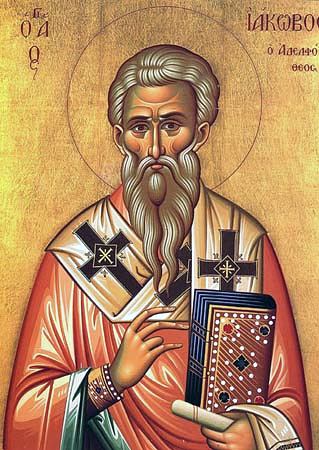
Q. Paul writes in Galatians that he met “James, the Lord’s brother.” Do you think this man was Jesus’s actual brother, or was he a former disciple or relative, who may have been considered “as close as a brother”?
Protestants and Catholics answer this question differently. (The man in question is sometimes called “James the Just” to distinguish him from two of Jesus’s disciples, James the son of Zebedee—”James the Greater” or “Elder”—and James the son of Alphaeus—”James the Lesser” or “Younger.”)
Protestants consider James the Just to have been an actual brother of Jesus based on the description of what happened in Nazareth when Jesus taught in the synagogue there. The people responded, ““Isn’t this the carpenter’s son? Isn’t his mother’s name Mary, and aren’t his brothers James, Joseph, Simon and Judas?Aren’t all his sisters with us? Where then did this man get all these things?” Since the offended crowds begin by naming Jesus’ (presumed) father and his mother, Protestants feel it is natural to understand the references to his “brothers” and “sisters” also as biological.
Catholics, however, believe as an essential matter of their faith that Mary was a virgin her entire life. This means that she could have had no other children besides Jesus (and of course that he came from a virgin conception). So over the centuries, beginning as early as the 300s, various theologians and biblical scholars have offered other interpretations of this passage. Some have suggested, for example, that the word adelphos, usually translated “brother,” could also mean “cousin.” The gospel of John reports that at the cross of Jesus, “his mother’s sister” stood next to his mother Mary. Some have suggested that it’s the children of this sister who are listed in the passage about Nazareth. Others have suggested that they may be the children of Joseph by an earlier marriage.
Whatever the explanation, biblical scholars do agree that the man Paul says he met in Jerusalem is the same man described in this account of Jesus teaching in Nazareth. He became the leader of the followers of Jesus in that city and he wrote the biblical book of James. In that book, he describes himself simply as “a servant of God and of the Lord Jesus Christ.” He considered this servanthood the most important thing about his own identity, not any “family connection” he might have had with Jesus, just as the apostle John recognized that the most important thing about himself was that he was a “disciple whom Jesus loved.”
So let us make Jesus’ love for us and our service to him our takeaway from this question, come to an informed conclusion in our own minds about the question itself, and be respectful of the beliefs of others.
Q. What is your opinion on the following quote by Pope Francis?
“It’s hypocrisy to call yourself a Christian and chase away a refugee or someone seeking help, someone who is hungry or thirsty, toss out someone who is in need of my help. If I say I am Christian, but do these things, I’m a hypocrite.”
(According to the Catholic News Service, Pope Francis made these remarks on Oct. 13, 2016, while answering questions during an audience with Catholic and Lutheran young adults visiting from Germany.)
Let me say first that I admire Pope Francis tremendously. Even though I am a Protestant, I have been experiencing the same “Francis effect” that many Catholics have been reporting. My faith has been strengthened and energized by his leadership and example.
As for the quotation itself, as a biblical scholar and former pastor, I am entirely in agreement with the spirit of it. I believe it expresses the essence of Jesus’ teaching that “as you have done so for the least of these, you have done so for me”:
“I was hungry and you gave me something to eat, I was thirsty and you gave me something to drink, I was a stranger and you invited me in, I needed clothes and you clothed me, I was sick and you looked after me, I was in prison and you came to visit me.”
The only word in the statement I have a slight issue with is “hypocrite,” though this may be due to my Protestant perspective. In his capacity, Pope Francis likely has every right to use it.
Hypocrites are people whose inward attitudes, priorities, and commitments do not match their outward statements and claims. Put simply, a hypocrite is someone who’s pretending to be a Christian, but really isn’t. The Protestant tradition emphasizes how no one but God really knows another person’s heart, so I don’t feel I’m able to say definitively that a particular person who claims to be a Christian is only pretending to be one. I can say, however, in full agreement with Pope Francis, that if we truly want to follow Jesus, we should put his teaching and example into practice and care for the hungry, the thirsty, the stranger (foreigner), the poor, the sick, and the imprisoned. Anyone who is actively opposing such ministry, or who is indifferent to it, can indeed be asked to “show cause” why they should still be considered a Christian.
I think Pope Francis is within his powers when he applies the word “hypocrite” even more strongly. As the spiritual head of the Catholic Church, he is responsible to define what Christian belief and behavior mean for the members of that communion. And so it’s valid for him to say, “If you chase away refugees, you’re not doing what we’re doing, so though you might still claim to be one of us, you’re really not.”
I recognize that the world’s refugee crisis is a complex problem and that people of good will can believe that differing approaches are called for to address it. I respect that. But whatever approach we take should be characterized by a compassionate desire to welcome and help people who have had to flee from their homes because of war, persecution, natural disaster, or other dangers.
Even measures that are taken, by their own description, to try to get a handle on the refugee crisis so that it can be addressed more effectively need to express compassion and consideration. I don’t believe I’m being inappropriately political on a blog devoted to non-partisan answers to questions about the Bible when I say that President Trump’s recent executive order suspending refugee admissions to the United States for 120 days (1) should never have been issued, but (2) if it were going to be issued, this could have been done with a far more charitable spirit. To give just one small example, people already cleared for entry who were on flights to the U.S. when the order took effect should certainly have been admitted. There was no reason to create such anguish for them and their families. The executive order could simply have applied to future processing, and let cases already approved go forward. I trust that in the days ahead, through the advocacy of concerned Christians and all people of good will, the unfortunate situation created by this executive order will be resolved in a compassionate, humanitarian way.
Thank you very much for your question and the concern behind it.
Detail of a stained glass window depicting the parable of the sheep and goats, Church of St Mary the Virgin, Gunthorpe, Norfolk
Q. The Bible repeatedly mentions forgiveness. I would like to know exactly what that is, because lately it’s been impossible for me to know whether I’ve really managed to forgive somebody. I’m still angry with them and feel bitter towards them. I think dark thoughts about them. When I pray the Lord’s Prayer, the line “forgive us for our sins, as we forgive those who have sinned against us” really sticks out. I worry that God will not forgive me if I cannot let this go. So what qualifies as forgiveness?
Thank you for this excellent and heartfelt question. It’s one that I’m sure many other readers have as well. To respond to it, let me share some principles of forgiveness that many people I encountered in my years in pastoral ministry found helpful. I believe these principles reflect the Bible’s teaching.
• Forgiveness is an act of the will that must be completed by emotional work.
Forgiveness is something that we choose to do because we know God expects it of us. In other words, it’s fundamentally an act of obedience. It’s true that the Lord’s Prayer implies that we should forgive if we want to be forgiven. But Jesus also taught that we should forgive because we have been forgiven. He told the parable of the unforgiving debtor, for example, to illustrate that because God has freely and graciously forgiven us in His great mercy, we should similarly show mercy to others. So choosing to forgive, in obedience, as an act of the will, is what qualifies as forgiveness. Once we make this choice and stick with it, God is satisfied, no matter how we feel afterwards.
I say that because as soon as we do choose to forgive, we often begin to struggle emotionally. For one thing, we need to deal with the hurt that another person has caused in our own lives. We may also have to come to terms with what feels like the unfairness of it all—”They’re getting away with everything, without so much as an apology!” But as we work through these emotions, choosing not to indulge in things like anger, bitterness, or dark thoughts, disciplining our minds, we can count on God’s grace to bring healing to our hearts and the recognition to our minds that by forgiving, we are being true “children of our Father in heaven, who causes the sun to rise on the evil and the good and sends rain on the righteous and the unrighteous.”
That is, we will find this healing if the same old wounds don’t keep getting re-opened. Which brings me to the next principle:
• Forgiveness does not mean letting the other person hurt you all over again.
Forgiveness is a decision about a specific, one-time wrong or injury, to “let it go” and not seek revenge in any form (whether openly and actively, or in the form of indulged resentment, dark thoughts, etc.). When another person has established a pattern of hurting you, however, the process of forgiveness—which always takes time—will not be able to keep up with the repeated injuries, and you will feel defeated spiritually. What you need to do instead is break the pattern. That will likely mean, initially, putting some safe space between you and the other person, until the old pattern dies off and a new one can possibly be established, once it’s safe to re-engage. Put another way:
• Forgiveness is not a substitute for establishing personal boundaries.
We need to do both of these things in our lives. We can’t do one without the other. We won’t be able to establish healthy boundaries if “unfinished business” in the form of resentment is tying us to the old shape of the relationship. And we won’t be able to forgive if we keep allowing the other person to hurt us.
So when might it be safe to re-engage? This is my last point:
Forgiveness is something you choose to do that sets you free on the inside. Reconciliation is something that two people have to agree to work on together. And before you try to reconcile with a person who has hurt you, before you let them back into your life where they might hurt you again, you need credible evidence that they have recognized their wrong, they are sorry for it, they will not repeat it, and they are committed to doing whatever they can to make things right with you. This is not something we can credibly believe about a person the first time they want to re-engage with us. Instead, we should identify safe confidence-building measures that we can try out a little at a time until we are assured that reconciliation can legitimately begin.
For example, it might be necessary for a while to have no direct contact with a person who has hurt you. Once you’ve had time for healing and strengthening by God’s grace, you might visit with them for a couple of hours in a coffee shop—not go and spend a weekend in their home! But things need to begin with the creation of some space and time for healing. It might not be possible to explain fully to the other person that you’re pursuing this, and why; if the relationship is already difficult, you may be blamed for being the problem, and this would only add to the hurt. But it should be possible to creatively and plausibly structure much more time away from the relationship, and if the other person seems to be catching on, you can simply say, “Yes, I feel as if I need some space right now.” You can’t predict how they’ll respond, but you shouldn’t worry about how they respond, either.
One qualifier: Everything I’ve said applies to relationships where you have some flexibility in how much time you spend with the other person. If it’s a toxic workplace relationship, however, and you have to be there many hours every week, you may actually need to find another job for the sake of your physical, emotional, and spiritual health. (Forgiveness doesn’t mean staying in an unhealthy situation that you are free to leave.) And if it’s a relationship with someone you live with—a spouse, parent, or child—and it’s much more than the regular wear and tear of people living under the same roof, it’s repeated serious hurts without any recognition of the harm being done, then I would strongly advise going for counseling about the dynamics in your immediate family, even if you have to start by going to a counselor alone. The issues at play in such a situation go far beyond a willingness to forgive. They require at least pastoral, and likely professional, counseling.
Q. Where did Jesus live in Egypt? Did they travel there on foot and how long did it take them to travel to Egypt?
A Dec. 13, 2016 comment on my post “How long did Jesus live in Egypt?” reports a visit to a home in Cairo that was supposedly the one in which the baby Jesus lived with his parents. This is, of course, possible. But I believe that Joseph, Mary, and Jesus would most likely have traveled to Alexandria for safety. There was a large Jewish colony in that city, and I even suspect that they had extended family or friends-of-friends who helped them settle there. But this is all speculative. The Bible simply reports that they went to Egypt, and we must rely on varying traditions for any further information.
The distance from Jerusalem to Alexandria is a little over 300 miles. In the time of Jesus, a “day’s journey” was considered to be about 20 miles. Assuming the family left from somewhere in Judea, it would have taken a little over two weeks for them to reach Alexandria (particularly considering that they were traveling with a young child).
Abu Serga (Saints Sergius and Bacchus Church) in Cairo, traditionally believed to have been built on the spot where Joseph, Mary, and Jesus rested at the end of their journey to Egypt.
Q. Does the principle of “healing their land” in 2 Chronicles now apply to our sphere of influence rather than to a plot of ground? Since Jesus Christ is the same yesterday, today and forever, can we still say it applies to all Christians who humble themselves, pray, seek Him, and turn from their wicked ways?
Sometimes when that passage in 2 Chronicles is quoted these days, “my people, who are called by my name” are equated with contemporary Christians, and “their land” is equated with the nation-state that a particular group of Christians is living in at a given time. I think we need to be careful about that. The passage actually expresses God’s reply to Solomon’s prayer at the dedication of the temple about something very specific.
Solomon prayed: “When the heavens are shut up and there is no rain because your people have sinned against you, and when they pray toward this place and give praise to your name and turn from their sin because you have afflicted them, then hear from heaven and forgive the sin of your servants, your people Israel. Teach them the right way to live, and send rain on the land you gave your people for an inheritance.” Solomon then prayed the same thing about “famine or plague, blight or mildew, locusts or grasshoppers.”
God appeared to him after the temple dedication ceremonies and promised in reply: “When I shut up the heavens so that there is no rain, or command locusts to devour the land or send a plague among my people, if my people, who are called by my name, will humble themselves and pray and seek my face and turn from their wicked ways, then I will hear from heaven, and I will forgive their sin and will heal their land.”
So this promise has to do with giving the land, the literal “plot of ground” on which the people of ancient Israel were living, relief from what we today would consider “natural disasters.” In the theocracy period, these were to be taken as prompts for the Israelites to examine themselves for any disloyalty or disobedience to their covenant God.
So I don’t think we can make a direct application of the promise to ourselves today. However, I think there is an important indirect application, along the lines you suggest. I think there are many indications in the Bible that the people of God, even in the current phase of redemptive history when they are the multinational community of believers in Jesus, can and should have a positive and preserving influence on the society around them.
We see this, for example, in Jesus’ parables about the mustard seed and leaven. While I think these have a legitimate application to the work of God within an individual’s heart and life, I believe they also describe the effects of the presence of the “kingdom of God” on its surroundings. (I understand the kingdom of God to be that community of people within which God’s will is done on earth as it is in heaven, that is, without resistance.) I think these effects actually extend to the physical environment, but that is not the only or even the primary place where they are felt. Primarily, the presence of the kingdom of God influences human relationships, making them more wholesome, healthy, and harmonious.
I think other Scriptures point to this same thing. For example, there’s a statement in Psalm 84 that those “in whose heart are the highways to Zion” pass through the dry valley and turn it into a place of springs. (I’m interpreting this symbolically, but I don’t think the psalm itself is making a literal statement in any event.)
I would include the passage in 2 Chronicles together with these others and conclude that there is an indirect promise in the Bible that repentant, obedient believers will have a positive impact, individually and especially corporately, on their “sphere of influence.” (To use your well-chosen phrase—I think that’s the right thing to envision.)
Something to which we can all aspire in this new year!
“When those in whose hearts are the highway to Zion pass through the desert, they turn it into a place of springs.” (Photo credit: Digital Aesthetica, Flikr_0413)
Q. When Satan took Jesus up the the heights and promised him the world if he would fall down and worship him…why would Jesus have been tempted to worship Satan?
Philip Augustin Immelraet, “The Temptation of Christ,” 1663
We do usually think of “temptation” as what happens when our desire for something becomes so irresistible that we’re inclined to make some moral compromise to get that thing. That picture does apply to the other two temptations that the devil offered Jesus, though it doesn’t quite apply to the one you’re asking about. (The temptation of Jesus by Satan is described near the beginning of the gospels of Matthew, Mark, and Luke.)
We can understand, for example, how Jesus would have had a strong desire for food after fasting for 40 days in the wilderness. Ordinarily there’s no compromise involved in satisfying a legitimate physical need within the limits of moderation. But in this case Jesus had been called to an extended time of fasting so that he could consider the implications of the voice he’d just heard at his baptism, “This is my beloved son, in whom I am well pleased.” He was called, in other words, to reflect on the nature of his calling to be the Messiah, which most interpreters say was confirmed definitively for him by this voice at his baptism. So it would have been a compromise to break that fast prematurely just because he was hungry, or just to prove that he had God’s favor. (“If you are the Son of God, command these stones to become bread,” the devil had said.)
Similarly, leaping off the highest point of the temple and landing safely on the ground might actually have been something that appealed to Jesus. He was a 30-year-old single man and we can well imagine that he might have gone in for extreme sports! It would be like bungee jumping, with the assurance of God’s power of deliverance providing the same confidence and security as a bungee cord. However, Jesus recognized that it would have been improper to put himself in danger just to prove that God would protect him. We are supposed to do our part to care for ourselves, and we’re supposed to trust in God by faith, without needing proof of God’s care when we’re not in any real danger.
But the third temptation was different. Jesus wouldn’t have found it desirable to worship Satan. So what the devil actually tried to tempt him with was power over all the kingdoms of the world. “Just think of all the good you could do if you had that power,” was the subtle lure. Satan’s pitch was that worshiping him would simply be a “necessary evil,” a means to a desirable end. The fallacy, of course, is that if we compromise to get into a position of power, then we’re compromised once we get there, so we can’t do the good we intended. This would certainly have been the case for Jesus if he’d tried to get power by literally selling his soul to the devil.
So the takeaway is that we aren’t always “tempted” by things that seem desirable, attractive, or alluring. Sometimes unpleasant things “tempt” us because we think of them as a means to an end. But God always has a better means to any legitimate end, a means that doesn’t require moral compromise.
Q. Paul says in Romans that “faith comes by hearing the Word of God.” But some people don’t read their Bibles, and they don’t attend worship to hear the Bible preached, and then they lack faith. Are there other places in Scripture that tell of more things God uses to increase our faith?
What’s sometimes called “Bible intake”—reading the Word, hearing it preached, reflecting on it with others, etc.—is one of the “spiritual disciplines” by which we invest in our relationship with God and so build our faith. But there are many other spiritual disciplines that also serve this purpose, and they too are described in the Scriptures.
One of these is encountering God in the beauty of His creation. Many interpreters describe Psalm 19 as speaking of “the two books of God,” nature and Scripture. That psalm says that creation has a “voice” that we can hear, and that from it we can learn more about God. Romans says similarly that “since the creation of the world God’s invisible qualities—his eternal power and divine nature—have been clearly seen, being understood from what has been made.” Not everyone heeds this “voice,” but it’s there for those who have ears to hear, and sometimes it surprises people.
Photo by Priscilla Smith
Silence and solitude are also spiritual disciplines by which people can seek God. Psalm 131 is an example of this: “ I have calmed and quieted myself.” God says in Isaiah, “In repentance and rest is your salvation, in quietness and trust is your strength.” Too often, as God also says in Isaiah, people will “have none of it.” But sometimes people experience involuntary silence and solitude, for example, when recuperating from an accident or illness, and they find that God meets them there even though they weren’t particularly looking for Him.
Devotional reading in books other than the Bible is something else that builds our faith (for example, biographies of people whose lives are an example to us, or the reflections of godly saints throughout the ages). I once argued, in the course of a sermon series I gave on spiritual disciplines, that Gideon’s faith had been strengthened by the equivalent in his day of devotional “reading”: he’d heard stories passed down through the generations about God’s works, so that he was able to reply to the angel, “If the Lord is with us, where are all his wonders that our ancestors told us about?” Knowing what God has done in the lives of others in the past helps build our own sense of expectation of what God can do in our own lives and our own time.
Another spiritual discipline is journaling, recording the events of our lives and then looking back on them over time to recognize God’s hand in those events, which we might not have been able to see while living in the midst of them. The book of Nehemiah is arguably that man’s own journal, in which he records events and reflects on them, interspersing prayers in light of his reflections (“Remember me for this also, my God, and show mercy to me according to your great love”).
One more way I’ll mention of increasing our faith is to pray faith-sized prayers. That is, when we have a concern about a situation, or an ambition to do something for God in this world, we pray for as much of it as we currently have the faith to believe for. If God has truly prompted this concern or godly ambition, that prayer will be answered in such a way as to encourage us to believe and pray for greater and greater things. I think this is what Jesus meant when his disciples asked him, “Lord, increase our faith!” and he replied, “If you had faith like a grain of mustard seed, you could say to this mulberry tree, ‘Be uprooted and planted in the sea,’ and it would obey you.” In other words, rather than trying to get more faith, use the faith you already have and discover what great things it can accomplish.
I hope these suggestions are helpful. Really any spiritual discipline—any of the time-honored ways in which believers invest in their relationships with God—will help a person’s faith to grow. That’s because faith is ultimately trust and confidence in God, and the better we know God, the more we understand that we can safely trust in Him.
Q. This is a sort of church and state question that is more theoretical than anything. What I’m wondering is if Christianity is true, and God made the universe according to his nature such that there are objective moral absolutes and so on, should Christians try in any way to impose a Christian moral code on people who don’t believe? In other words, if the best thing for human flourishing is to live in alignment with our God-ordained natures, to what degree should Christians try to make laws that outwardly compel people to live according to more or less Christian values (for their own good)?
For starters, let me say that I believe there’s a practical problem with the approach you’re asking about. Passing a law forbidding something doesn’t effectively prevent it, and passing a law requiring something doesn’t effectively make it happen. That’s because people typically don’t obey a law if they really don’t want to do what it says, or if they want to do what it says not to do. Fear of punishment is only a partial deterrent.
The classic example of this in the American experience is Prohibition. It did not compel Americans to become teetotalers. No one knows the actual effect it had on alcohol production and consumption, because it made those things very difficult to measure. But the general understanding is that consumption went down at first because supplies were limited, but as soon as illegal supplies came on line, consumption increased steadily. On the other hand, there was a significant and measurable decrease in alcohol consumption in the years before Prohibition, through social influences rather than legal force. I think that’s instructive. The most effective measures were persuasive, not compulsory. In our own day, organizations such as M.A.D.D. are having a renewed effectiveness through such persuasion. So this is something of a parable that Christians everywhere, and particularly in America, should bear in mind, as a reminder of the limits of legal force and the power of social forces.
In fact, I think your question leads directly to another one: For any given behavior we want to discourage, are we really better off passing a law against it? Or are we risking driving people who want to continue that behavior into the hands of criminals, strengthening their enterprises? Some things we simply must forbid, and enforce those sanctions as fully as possible, for the sake of social order and the protection of life and safety. I’m not advocating anarchy here. But we do have to consider that it may be better to allow certain things to remain legal and work to address their causes, rather than try to pass laws against them. In fact, even for things that unquestionably should be illegal, the laws against them are only a preliminary step. Those activities won’t go away, either, until their causes are addressed.
The Bible itself teaches us the capabilities and limits of the law. In arguing that Gentiles shouldn’t be expected to follow the Law of Moses, Paul writes in his letters that it did serve the functions of teaching and restraint. It illustrated for people how they should live, and it restrained, with strict penalties, the worst cases of personal injury and social disorder. But Paul also says pointedly that the Law was not capable of giving people the ability or desire to live in the way it specified. That depended instead on the transforming effects of life in a community that was living in covenant relationship with God, and ultimately on the gift of the Holy Spirit to that community and its members.
In our own day, societies can use all aspects of their “law,” from criminal penalties to features of their tax codes, to discourage some behaviors and incentivize others. In the process, they will teach, because this provides a picture of how they believe people should live. Allowing a tax deduction for charitable donations shows that the society encourages generosity to those in need. Creating and enforcing speed limits and other traffic regulations shows that the society does not want its members to endanger themselves or others by driving heedlessly. Societies also use laws to restrain. Having much more serious penalties for things like murder and robbery shows that such activities are dangerous and antisocial above all.
But this isn’t actually compelling people to live in a certain way. People will continue to do whatever they believe they can get away with until the causes of behavior are addressed, and that takes a lot more than passing a law. So the bottom line is that I don’t think we can “outwardly compel” people to live in a certain way through laws, though they can be an important first step.
But here’s the other side of the coin. In a democracy, people get the laws they work for. Otherwise, they get laws they haven’t worked for. So if Christians really do believe that, by God’s very design, certain activities are harmful and destructive, while others are beneficial and life-giving, then they need to be out there in the public-policy mix, at the very least trying to get positive things incentivized and negative things discouraged.
But I need to state some further qualifiers:
• I’m not talking about creating a theocracy, in which Christians take power and enforce the law of God (as they understand it) as the law of the land. For one thing, every time this has been attempted in church history, it has been a disaster. But in more theological terms, I believe that as redemptive history unfolded, the days of theocracy ended when Jesus introduced the new covenant and the people of God became a multinational community. Followers of Jesus now have a primary loyalty to the kingdom of God that is breaking into our world, but an important and continuing secondary loyalty to their own nations, to help them live up to their own highest ideals, consistently with the values of the kingdom of God. As an American, for example, I believe that I should support the ideals of democracy and civil liberties, while at the same time critiquing American culture’s extreme individualism, which (as social observers have been documenting) has caused narcissism to flourish and undermined our social fabric.
• What I am advocating is being in the mix. Pick your battles. Work for what matters most. To reach particular goals, form strategic alliances with people and organizations who might not agree with you about everything. In fact, they might agree with you about only one thing. But if that’s the thing you’re working for, you’ve got the potential to create a limited partnership with them.
• If what you’re really after is what you believe is best for people—human flourishing—then take care that your campaign, through its tone and tactics, doesn’t have destructive side effects. That would be tragically counterproductive.
I don’t believe it’s realistic to expect to be able to pass a comprehensive set of laws that will compel everyone, at least outwardly, to live as Christians believe people should. But if you are a citizen of a democracy, you have an obligation to support and work for legislation, and promote social measures, that will encourage people to live by the most transferable values of the kingdom of God. Probably the best place to start is with practical contemporary expressions of, “You shall love your neighbor as yourself.” Plenty to work for there.
Thanks for your thoughtful question! I hope these reflections give you further food for thought.
This poster from the 1920s illustrates the dilemma of Prohibition: once the law was passed, campaigns needed to continue for its enforcement, because people were simply disobeying it.
“Liberation of St. Peter” by Sebastiano Ricci (1659–1734). Peter was set free from prison while, or possibly even before, the other believers met to pray for his release. Does this kind of thing happen because God is outside of time?
Q. I’ve had the experience of praying for a need and then talking to the individual afterwards to find that the prayer was answered a few days earlier. Kinda interesting in a way; makes me think of our God being outside of time and not limited by it. It would seem to a skeptic that prayer was not needed in the first place and it was going to happen that way anyway but I feel a sense of amazement instead. What do you think? I realize that this is not usual; a need lies before us, we pray, and our prayer is answered in future time (can take years in some cases). I’m also aware of Peter’s release in Acts but curious what I might learn from you.
One possible explanation of your experience is the one you suggest, that God acted in response to the prayer but, being outside of time, was able to implement that response at a point in time prior to the prayer. Another explanation would be that for some reason God stirred up the prayer even though its object had already been realized.
I do believe that the initiative in prayer is God’s. Whether God simply wants to commune with us in deeper fellowship for a time, or whether God wants to accomplish something in partnership with us, He puts what is often called a “burden” on our hearts to pray. When this burden has to do with another person’s need (as in the case you describe), then I believe that God summons us to pray for that need for at least a couple of reasons.
For one thing, at least as I see it, God delights to work in partnership with us to such an extent that He will even choose to answer a prayer in a way that we have suggested, to give us a tangible part in His work. God, being omniscient, knows all possible ways to meet the need, and so is able to see how it can be done “our way” (so to speak), presuming that this path can indeed be followed consistently with His character and purposes. In this God is not humoring us, but honoring us with a genuine part in helping to bring about His purposes through prayer.
Another reason why God would lead us to pray for a need that He already intended to meet—and this is the one that relates more directly to your experience—would be so that when the need was met, it would be clear that God had done it. That way the prayed-for person wouldn’t just be helped practically, they’d also be assured of their Heavenly Father’s love and care for them. This might help explain your recent experience. God might have wanted your friend to know with confidence that He was the one who’d met the need and that He’d done this out of love. That’s the conclusion I’d draw if I learned that someone had been led to pray for me about a situation after it had already been resolved.
The case you mention from the Bible, of Peter in Acts, is similar, except that in that case the prayer was answered right while it was being prayed. Peter was miraculously freed from prison and he went to a house where the followers of Jesus were gathered and were already praying for him. (Depending on how you read the chronology of the account, however, it could even be argued that the angel came and started setting Peter free before this prayer meeting had quite gotten started.) One of the things that gives us confidence that God has done something in answer to prayer is that the answer comes while we are praying. I’d argue that God sends the answer at this time to give us the assurance of His love and care for us and of His involvement in the particulars of our lives.
So the timing of an answer to prayer can accomplish something further beyond meeting a practical need in a person’s life. If the answer comes during or even before the prayer, that’s an indication that it’s truly an answer from God.
And even if, as you also describe, it’s only after much prayer that an answer comes, we should still remember what Jesus said, that we should persist in the confidence that God loves us and is listening. “Won’t God protect his chosen ones who pray to him day and night? Won’t he be concerned for them? He will surely hurry and help them.” Sometimes the needs we’re aware of form only part of a set of complex, long-term, big-picture goals that God is working away at steadily. Once those needs are finally met, we recognize how this necessarily had to be done within a larger context.
Q. Several years back, a few of my close Christian brothers and I met a guy who was gifted, it was said, with the ability to prophesy. (That still exists, right?) If someone were to prophesy over you and tell you, “When I look at you, I see a man of the Trinity,” how would you interpret that?
First, I do believe that God still gives some believers the gift of prophesy. That is, God gives them insights about the character and gifting of a person or group to encourage them, and also gives them insights about the likely future consequences of the course that a person or group is on, either to warn or encourage them. But believers also have a responsibility to “weigh” what self-described or popularly-accepted prophets say, assessing it by the full counsel of the Scriptures and by the community’s collective wisdom. “Prophets should speak, and the others should weigh carefully what is said.” “Do not believe every spirit, but test the spirits to see whether they are from God, because many false prophets have gone out into the world.
As for what a (presumably genuine) prophet might mean by a “man of the Trinity,” I suspect that this involves more than just a belief in God as three-in-one. I would take it to be describing someone who had a relationship with God as Father, Son, and Holy Spirit. We know that in some mysterious way, God is three persons in one being. A man or woman of the Trinity, I’d say, would know each of these persons individually, without in any way compromising the unity that they have together.
In other words, such a person would know God as their kind, loving, generous, care-giving but also disciplining heavenly Father. (“As a father has compassion on his children,so the Lord has compassion on those who fear him.” “The Lord disciplines those he loves,and corrects each one he accepts as his child.”)
Such a person would also know Jesus as their Lord and Savior and in addition as their brother and friend. (“Both the one who makes people holy and those who are made holy are of the same family, so Jesus is not ashamed to call them brothers and sisters.” “I no longer call you servants, because a servant does not know his master’s business. Instead, I have called you friends.”)
And a man or woman of the Trinity would also know the Holy Spirit as comforter, companion, helper, counselor, and advocate—all the various translations of the term paraclete that’s used at the place in the gospel of John where Jesus promises the Holy Spirit shed a bit more light on the role that the Spirit is supposed to play in our lives.
So your question provides, for all of us, a good point of reflection. How well do I know each of the persons of the Trinity? Do I know God as Father, or do I have “father issues” that make me keep my distance from a God I regard as stern, harsh, and remote? Do I appreciate Jesus primarily for something he did for me 2,000 years ago, or can I say with the hymn writer, “What a friend we have in Jesus”? Is the Holy Spirit primarily a mysterious force to me, or do I speak and pray to the Holy Spirit and recognize the voice I hear in response? (If you’re not used to praying to the Holy Spirit, consider as examples the many hymns and songs that do this: “Gracious Spirit, Dwell With Me”; “Spirit of God, Descend Upon My Heart”; “Spirit of the Living God”; “Spirit Fall”; “Breathe On Us.”)
May we all become “men and women of the Trinity”!
Andrei Rublev’s famous icon of the Trinity, representing all three as full persons. (Portraying divine symbolism behind Abraham’s three visitors.)






 Good Question