Why didn’t Jesus explain his parables to everyone?

Q. I have a question about something I read today in my quiet time in the gospel of Mark. Why didn’t Jesus explain all of his parables to everyone who was listening?  Instead, it says he explained them to his disciples later, but for the public, everything was in parables. Is it because he knew the crowds were just “fans” who thought the things he said were interesting but not important? Jesus even says,”otherwise they might turn and be forgiven.” That sounds strange to me. Doesn’t he want each and every person on earth to believe, even though he knows there are many who won’t believe?

Vincent van Gogh, “The Sower,” 1888

Jesus says the things you’re wondering about when he’s explaining the Parable of the Sower to his close followers.  As I observe in my Mark study guide, it may appear that he doesn’t want “those on the outside” to understand, since he says that when they listen, they will be “ever seeing but never perceiving” and “ever hearing but never understanding.”  However, Jesus is actually quoting these phrases from the book of Isaiah.  That was how God described what the response of the hard-hearted Israelites would be when he sent Isaiah to speak to them.  These words explain what happens to someone whose heart is hardened, as represented by the first kind of soil in the parable.

(I discuss the passage in Isaiah in this post, in response to a question about whether God actually hardens people’s hearts so they won’t believe.  As I say there, “God really wants people to respond positively to his warnings and invitations and so be rescued. But the language here reflects God’s knowledge of the people’s confidence in their own strategies and his realization that they will choose their own way even more stubbornly when they’re challenged. And so God tells Isaiah, ironically, to go and make the people even more insensible and resistant. Whatever their response, the reality of the situation needs to be proclaimed.”)

Back here in Mark, it’s clear from the Parable of the Sower that other kinds of responses are possible, since the parable eventually describes the seed finding good soil and bearing much fruit, representing those who not only believe, but help others to believe.

It’s even clearer from the next parable that Jesus wants everyone to understand.  He uses a lamp to illustrate that he’s not deliberately concealing the truth about himself; he wants this to be “brought out into the open,” and ultimately it will be.

And so he invites everyone in the crowd, right after telling the Parable of the Sower, “Whoever has ears to hear, let them hear.”  Jesus wants people to hear and understand–if they want to themselves.  In other words, as has often been observed, parables were the perfect vehicle for Jesus’ purposes because they either reveal or conceal the message, depending on the state of a person’s heart.  They reveal the truth to those who are open to it, but conceal it from those who aren’t ready for it yet.

That’s why, after telling the parable about the lamp, Jesus also warns his listeners–most likely the entire crowd once again–“Consider carefully what you hear.”  If people don’t understand, it’s not because God doesn’t want them to understand, it’s because of how they’re listening.  They might be just “fans,” as you put it, listening carelessly to what Jesus says as some kind of novelty or diversion.

I think you actually model the kind of response Jesus is looking for.  You’re not just reading his words in your daily quiet time as some kind of religious duty.  You’re thinking carefully about them, and if something bothers you, you don’t just gloss over it, you try to find out what it means.

Keep doing this!  That’s what it looks like to be someone who truly has “ears to hear.”

Are Jeremiah’s oracles rearranged in The Books of the Bible?

Michaelangelo’s Sistine Chapel portrait of Jeremiah

Q. For The Books of the Bible, did you just reorder the biblical books? You didn’t, say, put the oracles within Jeremiah in chronological order? I was just reading Jeremiah in my other Bible and it’s so dang confusing going back and forth between kings and what not. I was wishing the oracles were more orderly.

The creation of The Books of the Bible did not involve any internal rearrangement of biblical books.  That was something that our project team agreed early on with the NIV translation committee to leave off the table.

However, the question of internal order within Jeremiah specifically has come up on several occasions over the course of our work.  This is because, as the “Invitation to Jeremiah” in The Books of the Bible explains, it appears that a large section of that book has been dislocated.

Jeremiah has four major parts:
1. Mostly poetic oracles, undated, likely not in chronological order.
2. Mostly narratives, dated, but not in chronological order.
3. Mostly narratives, dated, in chronological order.
4. Poetic oracles against the surrounding nations.

The introduction to Part 4, however, is found right after Part 1, suggesting that the oracles against the nations were originally placed before Part 2.  This is where they are found in the Septuagint, an early Greek translation of the First Testament.

It would certainly make sense to put these oracles against the nations back in their original location, right after the introduction to them, or at least to read them after that introduction.  Accordingly, in the reading plan for the Prophets module of the Community Bible Experiences, Biblica explains how Part 4 of Jeremiah appears to be out of order, so that people can choose to read it after Part 1 if they wish.

As for the lack of chronological order within Parts 1 and 2 themselves, this is due to Hebrew scribes’ preference for “chiasms,” intricate arrangements in which passages that feature certain themes or key words are paired opposite one another.

For example, as the “Invitation to Jeremiah” also explains, at one point in the book a prayer of Jeremiah’s is surrounded by two episodes that feature potters.  The very next prayer is surrounded by episodes that feature two  men named Pashhur.  And these two clusters of episodes are then surrounded by matching episodes relating to the city gates.

Similar chiastic arrangements are found in other prophetic books.  As I explain in my Isaiah study guide, for example, many of the arrangements there are “a bit like the kind of trophy case you’d find in the front hallway of a school. The trophies, awards, and plaques in such cases usually aren’t arranged in historical order, from left to right. Instead, the tallest trophy will likely be in the middle, with shorter trophies on each side, and even shorter ones towards the edges of the case—regardless of when they were won. Photos and plaques will be hung on the back wall where there is space and visibility, but not necessarily right behind trophies from the same era. The overall goal is to create a pleasing and appealing visual arrangement. In the same way, the poems, stories, and songs in the book of Isaiah are arranged not historically but artistically, to blend together into an overall message prophetic responses to significant challenges that the people of God faced at different times.”

The same can be said about the arrangements in the non-chronological portions of Jeremiah.

I hope this helps you navigate through that book a bit more easily!

What’s the difference between mental illnesses and demonic possession?

Q. What is the difference between mental illnesses and demonic possession? I read the post on your blog about whether the “evil spirit from the Lord” that tormented Saul was “an actual spirit-being” or “a dark and foreboding disposition of the human spirit,” and I’m hoping you can expand on that distinction.  I’ve read in Acts about the girl who was possessed and could predict things until Paul cast the demon out. Is one sign of possession the ability to do supernatural things like that?

Let me say first, in light of the recent discussion on this blog of “metaphysical naturalism” and its denial of the supernatural, that I do believe, according to the Bible, that there are supernatural evil beings who seek to oppress people and keep them from turning to God and experiencing the life that God offers.  Anyone who doesn’t share this belief will not find your question, or my answer, meaningful, and so it probably would not be worth their time to read any further.

Second, also by way of background, I think it’s important to observe that the Bible itself distinguishes between mental illness and demonic possession.  It’s not the case that the biblical writers simply assumed that everything we would recognize today as mental illness was caused by demons.

For example, when Matthew describes the beginnings of Jesus’ ministry, he tells how “people brought to him all who were ill with various diseases . . . and he healed them.” Among those Jesus healed, Matthew says, were the seleniazomenoi and the daimonizomenoi.

The first term, seleniazomenoi, comes from the Greek term for “moon,” selene, and it can be translated literally as “moon-struck.”  The English equivalent is “lunatic,” and that is how many English Bibles translate the term.  Some translate it as “epileptic” instead, but I think it does refer to people with mental illnesses, which were thought in the ancient world to be caused by the influence of the moon.

The second term, daimonizomenoi, means to be oppressed by a daimon or demon, which the New Testament writers understand to be an evil spirit.  It’s important to note that they don’t actually use the term “possessed,” although they do depict Jesus and the apostles casting demons out of people, as if these had occupied and controlled them.

So then what is the essential distinction between mental illness and demonic oppression?  The Theological Dictionary of the New Testament offers a helpful insight into this, in its article on daimon.  It says that in the case of demonic oppression, “What is at issue is not merely sickness but a destruction and distortion of the divine likeness of man according to creation. The centre of personality, the volitional and active ego, is impaired by alien powers which seek to ruin the man and sometimes drive him to self-destruction.”

In other words, we can think of someone with a mental illness driving a car but having trouble finding their way through thick fog and drizzle.  Someone oppressed by a demon, on the other hand, is having to wrestle with the demon for control of the steering wheel to stay on the road.

This volitional aspect of demonic oppression is also seen in the way that many, thought not all, who suffer from it may have “opened the door” in some way by choosing to become involved in the occult.  (Or they may have exposed family members by doing this.)

The girl you mention in the book of Acts who could tell fortunes illustrates another distinction: demonic oppression may be characterized by the demons doing supernatural or superhuman things through the person affected.  Another biblical example is the man described in the gospels as “Legion,” who “had often been chained hand and foot, but he tore the chains apart and broke the irons on his feet. No one was strong enough to subdue him.”

A final observation I would make is based once again on an insight from the Theological Dictionary of the New Testament.  After confirming the observation that “in the NT not all sicknesses are attributed to demons,” it continues, “Nevertheless, it may be said that the existence of sickness in this world belongs to the character of the [present age] of which Satan is the prince.”  In other words, we suffer from illnesses, including mental illnesses, because the creation has not yet been redeemed from its bondage to evil, sin, and decay.

That being the case, we may rightly suspect that an evil influence is at work to aggravate a mental illness.  Even when it is not a situation of outright demonic oppression or possession, there could be demonic harassment. Throughout the centuries, in fact, many outstanding Christian leaders, writers, artists, and so forth have struggled with depression and similar mental illnesses.  Beyond the natural medical causes, there may well have been spiritual opposition designed to discourage and disable these people from fulfilling their God-given vocations.  Both the natural and the supernatural dimensions need to be kept in mind.  But spiritual opposition is not, in and of itself, demonic possession.

In conclusion, from a pastoral perspective (I was a pastor for over 20 years), I would encourage a person (or their family and friends, on their behalf) to seek spiritual deliverance from demonic oppression through the help of mature, reputable, qualified Christian leaders in cases where a sharp internal conflict of the will is evident (i.e. something “makes” the person do unpleasant and uncharacteristic things that they don’t want to do), where the person’s health and life has repeatedly been put at risk (like the boy described in the gospels whom a demon often tried to throw into the fire or into the water), and where superhuman phenomena are present.  These are not infallible indications, and each one individually could have a different explanation, so in-person, real-time discernment by experienced and spiritually mature advisors is required.

On the other hand, I would encourage a person to seek counseling and treatment for mental illness if they experience persistent symptoms such as depression, anxiety, confusion, troubling or irrational thoughts, etc.  Particularly if the person can’t just “shake it off,” they should get professional help and be open to the benefits of therapy and medication.  But I also believe that spiritual resources such as prayer and community support are vital for relief from mental illness and that they can make a big difference in the lives of those who suffer from it.

Those who are delivered from spiritual oppression or who find God’s grace to cope with mental illnesses are  able to offer encouragement to many others through the gifts God has given them.  To give just one example, Joseph Scriven wrote the hymn “What a Friend We Have in Jesus” out of his experience of long struggle with depression.  I hope and pray that any who read this post and recognize that they need help from God will find it through the loving community of God’s people and so become a blessing to others in the same way.

Should worship songs be sadder?

Cover image from Gungor’s forthcoming album “I Am Mountain”

On the Community Bible Experience Facebook page I recently saw this re-tweet from Michael Gungor:

“Approximately 70 percent of the Psalms are laments. Approximately 0 percent of the top 150 CCLI songs (songs sung most in churches) are laments.”

His statement was that simple. But the original tweet proved so controversial, drawing so many protests and criticisms, that Gungor had to follow up with a post on the Church Leaders blog, explaining at greater length why he felt “worship music should be sadder.”

I was already thinking about expanding here on a comment I made on his post, and then our time of worship this past Sunday featured Gungor’s plaintive song “Dry Bones,” beautifully accompanied by three young interpretive dancers from the church.  This was all the encouragement I needed to share the following further thoughts here!

As I said in my comment, in response to those who apparently didn’t want to hear anything like a biblical “lament” in worship because, as one person asked, “Why would we have to lament? We have Jesus!”:

“Some of the misunderstanding about ‘laments’ may arise from a false impression that they are just a means of bewailing unfortunate circumstances. What are often called ‘laments’ are also known as ‘psalms of supplication,’ in which the psalmists offer a cry for help and a description of their troubles, but then strive to work through to a statement of trust (‘God, despite all that’s happening, I still trust you’) and to make petition for deliverance and vow praise to God for that anticipated deliverance. So-called ‘laments’ thus combine a realistic acknowledgment of difficult circumstances and troubled emotions with hard-won expressions of trust and praise.”

In other words, as I explain in my study guide to Biblical lyric poetry, these “laments” or “psalms of supplication” present a number of different elements; they’re not just complaints.  Not every psalm has all the possible elements, and the ones that are used can be presented in a variety of orders, but a basic pattern can be recognized.

Psalm 54 illustrates this pattern briefly and well:

Cry for Help:
Save me, O God, by your name;
vindicate me by your might.
Hear my prayer, O God;
listen to the words of my mouth.

Complaint:  
Arrogant foes are attacking me;
ruthless people are trying to kill me—
people without regard for God.

Statement of Trust:
Surely God is my help;
the Lord is the one who sustains me.

Petition:
Let evil recoil on those who slander me;
in your faithfulness destroy them.

Vow of Praise:
I will sacrifice a freewill offering to you;
I will praise your name, LORD, for it is good.
You have delivered me from all my troubles,
and my eyes have looked in triumph on my foes.

As this psalm illustrates, within a typical “psalm of supplication,” the cry for help and description of troubles certainly make up a “lament” in the popular sense of that word.  And while in many cases the psalmist is able to work through to a statement of trust and vow of praise, as happens here, in other cases (such as Psalm 88, which I call “one of the darkest psalms in the Bible”), we never see the psalmist get there.

And so Gungor’s point is very well taken that too many worship songs skip a realistic acknowledgment of present troubles and jump right to the hoped-for (or imagined) happy ending. And so, I say at the end of my comment on his post, “It would be great to hear some fully-orbed ‘praise songs of supplication'” (if calling them “laments” is too susceptible to misunderstanding) “that work honestly forward from the most difficult circumstances and emotional struggles to statements of trust and promises of praise.”

In fact, if we really want our worship music to mirror the broad range of reflection on experiences offered to us in the Bible, perhaps we should even have some songs that don’t actually show the songwriter reaching the place of expressed trust and promised praise.

Could our worship handle that?

Some follow-up thoughts about religion and science

A couple of quotations that will help flesh out some of the ideas I’ve explored in my recent series of posts about religion and science (which begin here):

(1)  A reader of the series sent me this quote from G.K. Chesterton’s book Orthodoxy, which he felt summed up pretty well what it means to be “in the middle of the lake”:

“The ordinary man has always been sane because the ordinary man has always been a mystic.  . . . He has always cared more for the truth than for consistency.  If he saw two truths that seemed to contradict each other, he would take the two truths and the contradiction along with them. His spiritual sight is stereoscopic, like his physical sight: he sees two different pictures at once and yet sees all the better for that. Thus he has always believed that there was such a thing as fate, but such a thing as free will also. Thus he believed that children were indeed the kingdom of heaven, but nevertheless ought to be obedient to the kingdom of earth. He admired youth because it was young and age because it was not. It is exactly this balance of apparent contradictions that has been the whole buoyancy of the healthy man.”

(2) In the most recent issue of Boston College Magazine, in an article entitled “On Not Knowing: The Intellectual and the Mystic Can Agree,” Lawrence Cunningham writes the following (for our purposes, simply substitute “person of faith” and “person of science” for “mystic” and “intellectual”):

Image of Thomas Aquinas accompanying Cunningham’s article

“The harmony between mystics and intellectuals can be described like this: When intellectuals begin to grapple with ideas in order to gain understanding, they grow aware of the horizon of unknowing that extends ever before them—and aware, too, that their goal recedes even as they advance to meet it under the penumbra of hope. Mystics follow a somewhat analogous path, in that their yearnings are never complete in this life; their experience of the presence of God is always tentative, elusive, transitory, and full of promise. Like the Christian intellectual, the mystic lives in the ‘not yet.’ How might their paths converge? Aquinas gives an interesting hint in his Summa Theologica. He begins by defining contemplation as principally pertaining to meditation on God, and then he says that the contemplative can be predisposed to genuine contemplation by a reflection on any truth—Thomas’s way of saying that the intellectual task of seeking and stating truth is a prelude to the encounter with Truth.”

Some further food for thought on the topic of religion and science as non-overlapping ways of knowing.

Did early humans with and without souls once co-exist?

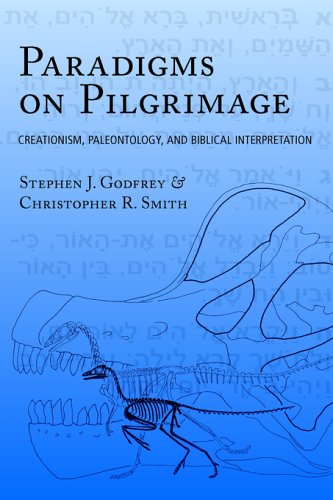
This is the final part of the three-part question about religion and science that I’ve been answering in this series of posts. (The phrase “middle of the lake” comes from my book Paradigms on Pilgrimage: Creationism, Paleontology, and Biblical Interpretation. It describes the attempt to address questions simultaneously from the non-overlapping perspectives of science and religion. The text of the book is available free online through the link provided.)

Q. This is more of a question that is posed along the border of religion and science, “from the middle of the lake” (assuming there is a middle). If God did use evolution and at some point along the line injected a soul into prehistoric humans as the Catholic Church maintains, wouldn’t that mean that there would have potentially existed simultaneously on the earth a mixture of “soul-possessing” hominids and “soulless” hominids separated by some small evolutionary difference (or maybe just geography)?

It is indeed the Catholic position that God grants souls to humans whose bodies come from evolutionary development.  As Pope John Paul II said in his October 22, 1996 address “On Evolution” to the Pontifical Academy of Sciences:

“Man is called to enter into a loving relationship with God himself, a relationship which will find its full expression at the end of time, in eternity.  . . . It is by virtue of his eternal soul that the whole person, including his body, possesses such great dignity. . . .  If the origin of the human body comes through living matter which existed previously, the spiritual soul is created directly by God.  . . . As a result, the theories of evolution which, because of the philosophies which inspire them, regard the spirit either as emerging from the forces of living matter, or as a simple epiphenomenon of that matter, are incompatible with the truth about man. They are therefore unable to serve as the basis for the dignity of the human person.”

In other words, the Catholic Church does believe and teach that the human soul is created directly by God, even if “the origin of the human body comes through living matter which existed previously.”

But when do humans receive their souls? The Catholic teaching regarding the individual today is that God grants a soul at the time of conception. But what about the very first humans?

The conclusion seems inescapable, if we are going to ask questions along these lines, that once “living matter which existed previously” had developed to the point where individual beings could be recognized as fully human, God granted them souls.  (I’d personally like to think that God granted souls to an entire early human community at once, in a sort of prehistoric Pentecost.)  But then the further conclusion is equally inescapable that, as you say, “there would have potentially existed simultaneously on the earth a mixture of ‘soul-possessing’ hominids and ‘soulless’ hominids separated by some small evolutionary difference.”

Of course neither science nor religion is in a position to shed any further light on this question.  Science cannot detect or verify the presence of a soul.  The Bible, for its part, says in Genesis that “the Lord God formed a man from the dust of the ground and breathed into his nostrils the breath of life, and the man became a living being.”  This indeed sounds like an organic origin for the human body and a divine origin for the human soul or spirit.  But the Genesis account represents all of humanity through a single figure (as an NIV translation note explains, “The Hebrew for man (adam) . . . is also the name Adam), so it doesn’t provide any details about early hominid communities with and without souls.

And so I can’t really say much more in answer to your question.  Indeed, the attempt to answer it confirms for me what I describe in Paradigms on Pilgrimage as “the wisdom of not spending too much time in the middle of the lake before swimming back to one side or the other.”  This is why, in my Genesis study guide, when groups get to the story of Adam and Eve, I acknowledge that there has been “much debate about how the events recounted here relate to scientific descriptions of human origins” and I encourage participants “simply to state how they understand the story of Adam and Eve:  is it literal?  symbolic?  allegorical?  something else?”  “Each person can then be encouraged to hold their own views on this question confidently and humbly,” I continue, “and engage Genesis on a literary level in this study.  This should be a level on which people who hold different viewpoints can have a profitable discussion.”

Still, you have certainly been very thoughtful about the “middle of the lake” implications of the Catholic view (which many outside the Catholic tradition may hold as well), and I thank you for sharing your reflections on it.

Does doing science make a person less likely to believe in God?

Q. It would be difficult to expect scientists to employ anything other than “methodological naturalism” (a commitment to work only from empirical data) in their work. If they didn’t, for every attempt to explain natural phenomena, they would have to add the possibility of supernatural causation or involvement, which would definitely be unproductive. But do you think that methodical naturalism in any sense encourages “metaphysical naturalism” (the presupposition that there is no supernatural, and that natural causation can explain everything)?

This is the second part of a detailed question that I’ve posted in its full form here.  (The terms “methodological naturalism” and “metaphysical naturalism” come from a book by Brian Alters.)

In response to this part of the question, I’d have to say no, I don’t believe that the discipline of working only from observable, measurable data and seeking the most reasonable explanation for one’s observations necessarily encourages disbelief in the supernatural.  I can imagine a scientist who was also a person of faith saying, “Let’s see how much we can account for this way,” but still expecting that in the end there would be many things that could only be regarded with reverent wonder.

The lives of scientists throughout the centuries who have also been people of deep faith provide abundant anecdotal evidence that methodological naturalism does not inevitably lead to metaphysical naturalism.  Such scientists include Kepler, Galileo, Descartes, Pascal, Leibniz, Newton, Linnaeus, Faraday, Mendel, Pasteur, and, more recently, Francis Collins of the Human Genome Project.  Numerous further examples could be given.  Many of these scientists have written about the compatibility of faith with scientific endeavor.  (See, for example, Collins’ book The Language of God.)

Along those lines, in my book Paradigms on Pilgrimage, co-authored with Stephen J. Godfrey (himself a widely published scientific researcher), I cite the example of King Solomon, who was noted for his natural-scientific investigations, and paraphrase one of his proverbs this way:  “God has hidden countless fascinating and wonderful things in his creation, and he wants us to delight in discovering them.”  I go on to say that “when we do, we bring him pleasure by fulfilling his purposes.  So all those who are called to scientific enterprise should pursue that calling without fear or doubt, but rather with joy and enthusiasm.”

In other words, we can adopt the discipline of “methodological naturalism” for the purposes of science without worrying that it will lead to “metaphysical naturalism.”

(The entire text of Paradigms on Pilgrimage is now available free online.)

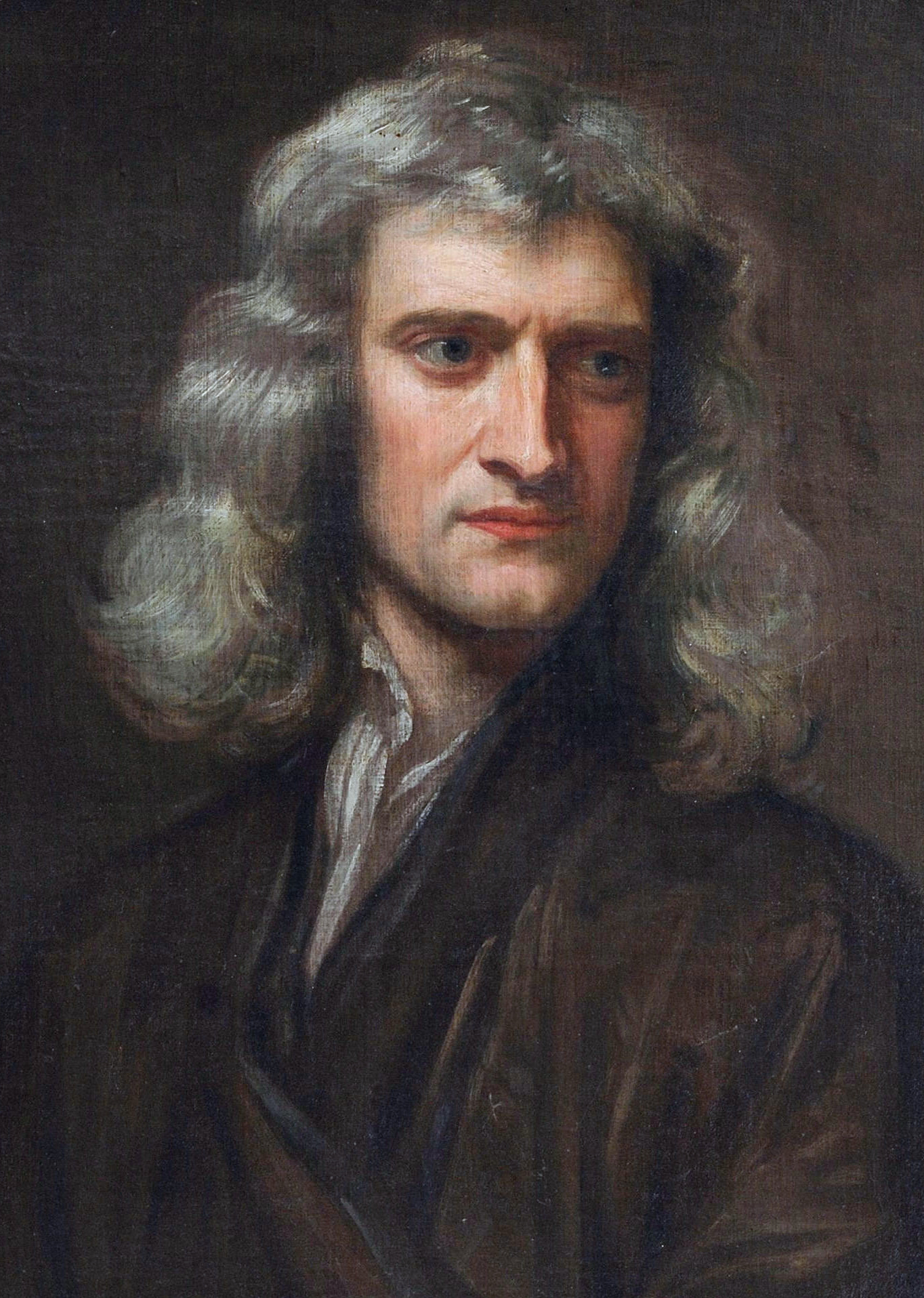
Sir Isaac Newton, scientist and believer (portrait by Godfrey Kneller, 1689, courtesy Wikipedia)

Dialogue between science and miracle

Q. Although it seems intellectually satisfying to isolate religion and science into separate domains, that doesn’t seem to fully fit the picture. Though religion typically answers questions of who and why, any time the Bible maintains that miracles occurred, it steps into the realm of science. For example, Jesus either physically died and rotted somewhere or he was brought to heaven. If the spiritual world is real, there should be empirical consequences and “facts” that science can never explain. Is it accurate to maintain that the two domains of science and religion really are so separate, or is that more of an ideological goal to strive for to achieve clarity in thinking?

This is the essence of the first part of a long and thoughtful question that was recently posed to this blog.  (You can read the full text of the question here.)  In response to this part, I would say that there is indeed some overlap between the otherwise separate domains of religion and science, in that science (the discipline of drawing reasoned conclusions from empirical observations) can disprove the claim of a miracle by providing contradictory evidence.

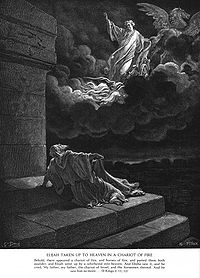
Gustave Dore, “Elijah Ascends to Heaven”

In fact, we see this process of dialogue between miracle and science within the Bible itself.  When Elisha comes back from across the Jordan to report that Elijah has been taken up alive into heaven by a whirlwind, the company of prophets in Jericho isn’t so sure. “Look,” they tell Elisha, “we your servants have fifty able men. Let them go and look for your master. Perhaps the Spirit of the Lord has picked him up and set him down on some mountain or in some valley.”

In other words, “Maybe that whirlwind wasn’t a miraculous transport to heaven after all.  Maybe it was an ordinary whirlwind that has left Elijah stranded somewhere out in the desert, where he needs our help!”  Elisha is sure of the miracle and tells the prophets not to go.  They go out anyway and search in the desert for three days, but find nothing.

So did this empirical search that turned up no body prove that Elijah was taken up alive into heaven?  Not quite.  It just didn’t prove that he wasn’t.

In other words, when science investigates a miracle, the most that can be said on the side of the miracle is that there is no scientific proof that it didn’t happen.  But by definition (since science properly limits itself to the non-miraculous), there is also no scientific proof that a miracle did happen.

The same applies to the resurrection of Jesus.  If his body had ever turned up, that would have disproved the resurrection.  We know that his body never turned up because of what historians call the “criterion of embarrassment,” in which a hostile source needs to offer some explanation for an embarrassing detail. The gospels record how opponents claimed that Jesus’ early followers had stolen his body–an admission that it was missing.

A strong historical case can be made that it was not just unlikely, but virtually impossible, for Jesus’ body to have been stolen. In fact, as far as I’m concerned, if we do not rule out the miraculous, the most likely explanation of the events of that first Easter morning is that Jesus actually rose from the dead.  That is not a scientific conclusion, because it allows for miraculous possibilities.  But I do consider it a reasonable conclusion.

So the respective fields of investigation of science and religion do overlap in that science can falsify certain religious claims that should (or should not) leave real-world evidence.  But science does not validate religious claims when it cannot falsify them.  That is still the role of faith.

A question about science and religion

The following question about science and religion was recently submitted to this blog. Even though the writer invites me to “edit the length . . . for space considerations,” I find the whole question so thoughtful and articulate that I’d like to run it in its entirety here, and address its three points in a series of posts.

Q.  In your book Paradigms on Pilgrimage you state that “science, in seeking to explain origins, answers questions of what, when, and how, but responsibly remains silent on questions of who and why, which are instead the purview of religion and philosophy”. When you discuss Brian Alters’ book Defending Evolution, you speak sympathetically of his view that in its pursuit of knowledge science is properly “methodically naturalistic,” limiting itself to what can be observed and measured, as opposed to being “metaphysically naturalistic” and denying the existence of God or the supernatural.

These views seem to be held by many modern intellectuals including S. J. Gould who wrote that the “net of science covers the empirical realm: what is the universe made of (fact) and why does it work that way (theory)…[while the] net of religion extends over questions of moral meaning and value. These two magisteria do not overlap.”

In light of the above, I have a few questions that you might be able to answer through a couple of posts.

First, although it seems intellectually satisfying to isolate religion and science into separate domains with a shared border, it doesn’t seem to fully fit the picture. Though religion typically answers questions of who and why, it would seem to transgress into the realm of science in many areas. Considering that science looks at the empirical realm, any time the Bible maintains that miracles occurred, it steps into the realm of science. Jesus either had a human father or he didn’t. He also either physically died and rotted somewhere or he was brought to heaven. Either way though, those are measurable phenomena in the empirical realm that the Bible answers supernaturally. Of course, miracles are merely a suspension of the way the world normally operates but that is the point, if the spiritual world is real there should be empirical consequences and “facts” that science can never explain. Is it accurate to maintain that the two domains of science and religion really are so separate or is it more of an ideological goal to strive for to achieve clarity in thinking?

This part of the question is answered here.

Secondly, I would agree that it would be difficult to expect scientists to employ anything other than methodological naturalism in their work. If they didn’t, for every attempt to explain natural phenomena they would have to add the possibility of supernatural causation or involvement which would definitely be unproductive. However, isn’t it possible that in being methodically naturalistic scientists might be blinding themselves to certain physical facts that don’t fit their paradigm which would in turn lead to wrong conclusions and theories about the physical world? For example, in the case of origins, in one direction, I don’t think that scientists would rightly ever conclude that God exists because they were unable to explain the origin of the universe or of life. Appealing to the supernatural is off limits in science and is usually viewed as lazy investigation. In the other direction though, assuming that God did create the universe and life, there will come a time when scientists, because they are methodologically naturalistic will be looking for something that isn’t there. They will be trying to explain in physical terms something that can only be explained supernaturally. Beyond just origins though, isn’t it possible that scientists have already constructed theories that aren’t getting the full picture because they are methodically naturalistic? Do you think that methodical naturalism in any sense encourages metaphysical naturalism or is that only a “straw man” constructed by modern creationists?

I respond to this part of the question in this post.

Finally, this is more of a question that is posed along the border of religion and science, “from the middle of the lake” (assuming there is a middle). If God did use evolution and at some point along the line injected a soul into prehistoric humans as the Catholic Church maintains, wouldn’t that mean that there would have potentially existed simultaneously on the earth a mixture of “soul-possessing” hominids and “soulless” hominids separated by some small evolutionary difference (or maybe just geography)?

I answer this last part of the question here.

Feel free to edit the length or format of my questions for space considerations.

Thank you!

Are Christian men not supposed to cry?

A reader of my recent post about the Head Covering Movement also read a similar post on the Wartburg Watch about “Head Coverings on the Rise.” It explained how certain groups are promoting head coverings in an effort to distinguish male and female identities.

My reader was concerned to see comments there by Tim Bayly, senior pastor of ClearNote Church in Bloomington, Indiana and former Executive Director of the Council on Biblical Manhood and Womanhood, claiming that signs of “femininity in men” included “doubting themselves, using hedge words and phrases, wearing jewelry, abdicating authority, shedding tears,” and “being vain in their appearance.”  My reader asked:

Wow – disturbing to see “shedding tears” listed as a violation of men’s roles!!  How can they reconcile that with Jesus??

This is an excellent question, and a response to it provides a useful illustration of how the ideas of male and female roles that some groups are promoting owe much more to cultural influences than to biblical ones.  A similar study could be done of some of Bayly’s other signs of “femininity in men,” as well as of his signs of “masculinity in women.” (These include “working out”–does God not want women to be physically fit?  Even the so-called Proverbs 31 Woman is praised because “her arms are strong for her tasks”!)  But a single study of praiseworthy biblical men shedding tears will have to suffice here.

First, as my reader observed, Jesus himself shed tears openly.  Not only did he weep over the death of his dear friend Lazarus (even though he was just about to raise him from the dead!), he wept openly when he saw Jerusalem from a distance and sensed its impending fate–destruction at the hands of the Romans.

If we consider Jesus our example, as all Christian men and women are supposed to, then he must provide an illustration for both sexes of the freedom to express godly emotions openly.  Indeed, as historic hymns illustrate, the tears Jesus shed on earth have long been understood as a consolation to all who still mourn here:

Jesus wept! those tears are over,
But His heart is still the same;
Kinsman, Friend, and elder Brother,
Is His everlasting Name.
Savior, who can love like Thee,
Gracious One of Bethany?

When the pangs of trial seize us,
When the waves of sorrow roll,
I will lay my head on Jesus,
Refuge of the troubled soul.
Surely, none can feel like Thee,
Weeping One of Bethany!

But while Jesus, in his incarnation, is the supreme biblical example of a godly man, he is not the only praiseworthy man who weeps in the pages of Scripture:

• Esau, often held up as a “man’s man” in the Bible (“a skillful hunter, a man of the open country”), wept when Jacob stole his birthright, and he and Jacob wept together when they were reconciled.

• Jacob wept when he thought his favorite son Joseph had been killed.  Joseph wept when he was reunited in Egypt with his brothers who had betrayed him and he discovered that they were repentant.  (In fact, “he wept so loudly that the Egyptians heard him, and Pharaoh’s household heard about it.”)

• When David and his men–tough guys all–discovered that the Amalekites had raided their city of Ziklag and carried off their families, they “wept aloud until they had no strength left to weep.”  David and his friend Jonathan “wept together” when they were forced to part because of the violent jealousy of Jonathan’s father, King Saul.

• Nehemiah wept when he heard that Jerusalem still lay in ruins.

• Peter wept when he realized that he had betrayed Jesus.

• The elders of the church in Ephesus all wept as they said goodbye to Paul for the last time. (Apparently even church elders weeping together isn’t inappropriate, according to the Bible.)

Many other examples could be given, but the point should be clear by now.  To suggest that there is any Scriptural basis for arguing that godly men shouldn’t cry overlooks a broad range of positive examples throughout the Bible, including most notably Jesus himself.  If we are concerned about appropriate roles and identities for men and women, we need to be informed by God’s word about this, not by cultural assumptions.