
Was the Israelite kingdom divided between David and Ish-bosheth, or was it only divided later?

Q.  After Saul dies, the narrative in Samuel-Kings says that “the men of Judah came to Hebron, and there they anointed David king over the tribe of Judah,” but that “Ish-Bosheth son of Saul . . . became king over Israel.”  I always thought that the official ‘division’ of the kingdom happened later, when Rehoboam rejected the elders’ counsel and Jeroboam led the northern tribes in revolt.  Can you reconcile these two accounts for me?

The rivalry between David and Ish-Bosheth was not a division of the ancient Israelite kingdom into two parts, it was a civil war to see which of these men would become king over all twelve tribes.

Samuel-Kings uses its characteristic “regnal notice” to describe how Ish-Bosheth succeeded his father Saul as king: “Ish-Bosheth son of Saul was forty years old when he became king over Israel, and he reigned two years.”  A similar notice does not appear for David until after the contest is settled and all of Israel accepts him as its king, even though the notice does acknowledge David’s time as king only of Judah: “David was thirty years old when he became king, and he reigned forty years. In Hebron he reigned over Judah seven years and six months, and in Jerusalem he reigned over all Israel and Judah thirty-three years.”  So in effect Ish-bosheth became king after Saul, but David eventually displaced him.

There’s actually a record in the book of Chronicles of the large numbers of warriors–hundreds of thousands–from all the other tribes who “came to David at Hebron to turn Saul’s kingdom over to him, as the Lord had said“–in other words, to help him win the war against Ish-bosheth.  Among them are 200 chieftains from Issachar who, we are told, “understood the times and knew what Israel should do.”  This might be said of all these warriors and their leaders from every tribe: They knew that David was God’s choice to succeed Saul and they gave him their allegiance and support even as he was in the process of defeating his rival.

The situation was different between Rehoboam and Jeroboam.  Because of Solomon’s disobedience (worshiping other gods!), the Lord told him that he would lose the kingdom, except that one tribe would be left to his family dynasty for David’s sake.  Solomon’s son Rehoboam adopted foolish, oppressive policies and wouldn’t listen to sound advice, and in response a leader name Jeroboam (one of Solomon’s former high officials) led a revolt that permanently drew the northern ten tribes into a kingdom of their own.  The original kingdom was never reunited and both parts, Israel in the north and Judah in the south, were eventually conquered and exiled by the great empires of the ancient world.

Hope this is helpful!
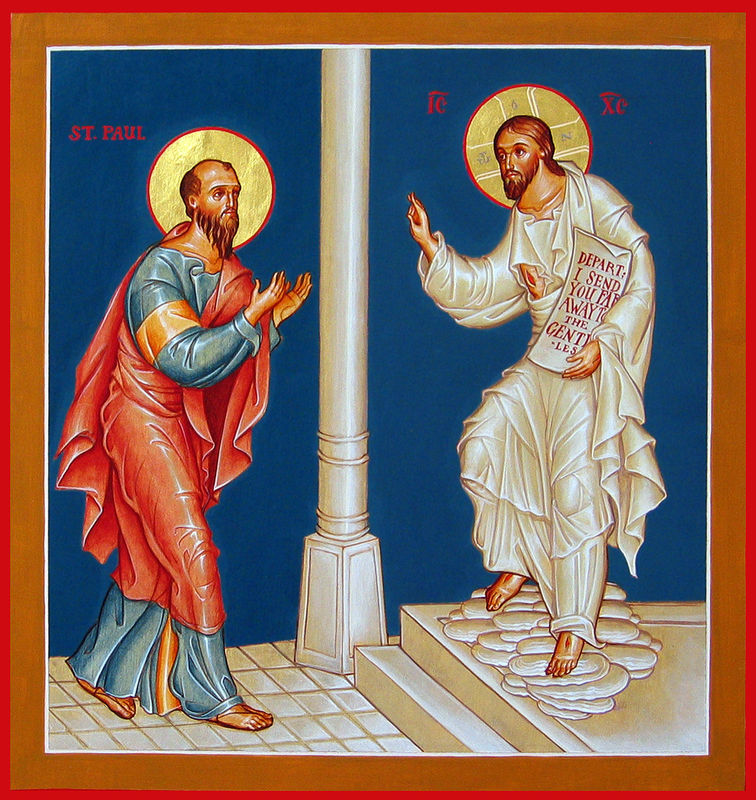
Did Jesus and Paul have different focuses in their teaching–the kingdom of God vs. salvation by grace?

Q. Why does Jesus seem to focus so much on “the kingdom of God” while Paul seems to focus on “salvation by grace”? Are they two sides of the same thing, or are they different focuses?

I think it is fair to say that Jesus’ teaching was essentially about the kingdom of God.  That’s how Matthew, Mark, and Luke actually summarize his teachings in their gospels—in Luke, for example: “Jesus traveled about from one town and village to another, proclaiming the good news of the kingdom of God.”

But I don’t think it’s quite accurate to say that Paul’s teaching is essentially about salvation by grace.  As Gordon Fee has shown quite convincingly in his book God’s Empowering Presence (abridged in Paul, the Spirit, and the People of God), we actually have that impression about Paul because we read him through the eyes of the Reformation.

The Reformers were trying to respond to a situation in which salvation was being depicted, explicitly or implicitly, as the result of works.  Beginning with Luther, the Reformers found in the opening parts of epistles such as Galatians and Romans a strong insistence that salvation is by grace alone, through faith alone, and they made this the centerpiece of their response.  All Protestants are heirs of the Reformation and so we see Paul through this lens.

But Paul was not actually writing to counter people who taught salvation by works.  Rather, he was correcting the teaching that salvation was by grace and sanctification was then by works—specifically works such as circumcision (the main issue in Galatians) or keeping kosher and Jewish festivals (as in Colossians).

So Paul emphasizes salvation by grace, not works, in the earlier parts of such epistles so that he can make the argument that sanctification should and must come by similarly by God’s work in us, not our work for God.  As he challenges the Galatians, “Are you so foolish? Having begun by the Spirit, are you now being perfected by the flesh?”

This reference to the Spirit is the key element.  Paul’s opponents said that people, once saved by grace, needed to be trained and restrained by the law; otherwise, what would keep them from running wild?  Paul countered that the transforming influence of the Holy Spirit in believers’ lives would change them into people who desired and delighted to obey God.

But the very fact that the Holy Spirit was and operating in this fashion was, for Paul, evidence that the “age to come” or the “kingdom of God” was breaking into human history.  In other words, the essential incentive to live by the Spirit and not by the flesh is that we are already citizens and heirs of the kingdom of God.

Towards the end of Romans, for example, Paul turns aside a legalistic concern for sanctification through keeping kosher in favor of the transforming influence of the Spirit by explaining, “The kingdom of God is not a matter of eating and drinking but of righteousness and peace and joy in the Holy Spirit.”  And he warns the Galatians against the “deeds of the flesh” by reminding them that “those who do such things will not inherit the kingdom of God”—in other words, those who will inherit the kingdom of God do not do such things.

So we see that the notion of the “kingdom of God” is not an emphasis that’s central to Jesus’ teaching but missing from Paul’s.  Rather, for Paul the presence of the kingdom is evidenced in the coming of the Spirit and in the Spirit’s transforming influence, which allows people not only to be saved by grace rather than works, but also to be sanctified by the Spirit rather than by works.

(This is only a brief overview; I develop this understanding further in my study guides to Paul’s Journey Letters and Paul’s Prison Letters.)

(Also see the series of four posts that begins here for a further discussion of how the teaching of Jesus compares with that of Paul: “How does New Testament teaching progress from Jesus to Paul?”)

An icon depicting Paul receiving his apostolic commission from Jesus.

Why are the details of some episodes in different gospels irreconcilable?

Q. Why do several of the stories told by multiple Gospels have details that seem to be contradictory? I would expect that different authors would bring out different (non-contradictory) details when telling the same story, but there seem to be details that just flat-out can’t be reconciled in some cases. Stories I’m thinking of include the woman who poured perfume on Jesus (did that happen on two occasions?), the time Jesus walked on water, and the time when Judas betrays Jesus in the garden.

Ivan Aivazovsky, “Jesus Walks on Water”

You’re right that when the same story is told in more than one gospel, sometimes there are not just differences in which details are included, there are also differences in the specific facts of the story.

For example, when Jesus walks on the water, Matthew includes the detail that Peter wanted to walk on the water, too; Mark and John don’t mention this.  Matthew and Mark simply say that the wind died down when Jesus got into the boat; John says that “immediately the boat reached the shore where they were heading.”  These could  be cases of one gospel writer knowing about something the others didn’t, or at least of one writer choosing to include something the others left out.

But there is another difference in detail between the versions of this story that can’t be reconciled this way.  Both Matthew and Mark have the disciples starting across the lake at the end of the day or in the evening, and Jesus walking out to them “shortly before dawn.”  In other words, the disciples were on the lake all night.  But John says that they saw Jesus approaching the boat “after they had rowed about three or four miles.”  We would have to make a deliberate effort to harmonize the stories by insisting, “Ah, the winds must have been so strong and the waters so rough that they were only able to row 3-4 miles all night.”  But that’s not what John says, and it doesn’t seem to be his meaning; instead, he depicts the episode as taking place once evening has given way to “dark,” not with dawn approaching.  So there is a time difference.

Similar points could be made about the other episodes you mentioned.  In Matthew, Mark, and Luke, Judas identifies Jesus in the Garden of Gesthemane by kissing him on the cheek, the customary respectful greeting of the time.  But in John, Jesus identifies himself after asking the soldiers, “Who is it you want?”  And while all four gospel writers agree that a woman anointed Jesus with perfume in the city of Bethany, and it’s not impossible to reconcile all the accounts to conclude that this took place in the home of a man named Simon, Luke sets the episode early in Jesus’ ministry, while the other gospel writers place it near the end of his life.

But I don’t personally see irreconcilable details such as these as diminishing the truth or authority of the Bible in any way.  Rather, as many have observed, these differences actually show that the gospel writers weren’t all trying deliberately to tell the same story as the others.  This should give us even greater confidence in the independence and authenticity of their reports.  If some minor details differ, the main points are always confirmed.  And so we can be confident, based on multiple independent reports, that Jesus did walk on the water–the gospel writers agree about this miracle that testified to who he was.  Judas did betray Jesus by bringing the soldiers to the garden.  And a woman did anoint Jesus with perfume, and he acknowledged this as an appropriate, if extravagant, act of worship.

We only have problems with the differences in minor details if we embrace the idea that if the Bible is to be the word of God, it has to present only exactly what happened, without dispute or variation, down to the last detail every time.  That’s simply not the kind of Bible God has given us.  We should recognize that we have instead a Bible whose human character, including such variation in minor details, only helps it to be an even better authoritative witness to divine truth.


How could Abram go to a place called Dan when the person it was named after hadn’t been born yet?

Q.  It says in Genesis, “When Abram heard that his relative had been taken captive, he called out the 318 trained men born in his household and went in pursuit as far as Dan.”  But I thought that Dan the tribe, descended from Dan the son of Jacob, came before the land known as Dan. So how could the land of Dan appear in Genesis before the tribe of Dan?  

The biblical authors typically use contemporary place names within historical accounts, even when the places in those accounts didn’t have those names at the time of the action described.

The city of Dan was actually known as Laish at the time of the events described in the account you read.  It would not be named Dan until several hundred years later, by descendants of Abram’s great-grandson.  But the biblical author uses the name for this place that readers will recognize.

In a couple of places in this same account, the author uses the old name and then gives the contemporary one:  he speaks of “the king of Bela (that is, Zoar)” and “the Valley of Siddim (that is, the Dead Sea Valley).”  But as a rule, the biblical authors use contemporary names.

We see this most clearly in cases where an account actually describes how a place got its name.  For example, we read this in the story of Gideon in the book of Judges:  “They also captured two of the Midianite leaders, Oreb and Zeeb. They killed Oreb at the rock of Oreb, and Zeeb at the winepress of Zeeb.”

What the account obviously means is that during this battle, the Israelites caught up with the Midianite leader Oreb at a certain large rock, where he was killed, and ever since then, that rock has been known as the “rock of Oreb.”  They overtook the leader Zeeb at a certain winepress, where he was killed, so it got the name “winepress of Zeeb.”  But the story is told as if those places already had those names.

It would be just like somebody today talking about something that Kareem Abdul-Jabbar did while playing basketball in college.  At that time, his name was actually Lew Alcindor.  But we use the name that our audience will recognize.

Lew Alcindor (later Kareem Abdul-Jabbar) coached by John Wooden at UCLA