Is the Bible what it has become?

In this series I’ve used the following examples to explore generally whether the accumulated marks of an artistic creation’s subsequent history as a cultural artifact become part of its essential substance and meaning.  I’ve done this as a means of asking specifically whether chapters and verses and other historical accretions should now be considered an integral part of the Bible:
– The cleaning of the Sistine Chapel ceiling;
– The famous crack in the Liberty Bell; and
– The isolation of the figure from Whistler’s painting Arrangement in Grey and Black as “Whistler’s Mother.”

What can each of these examples help us understand about the Bible?

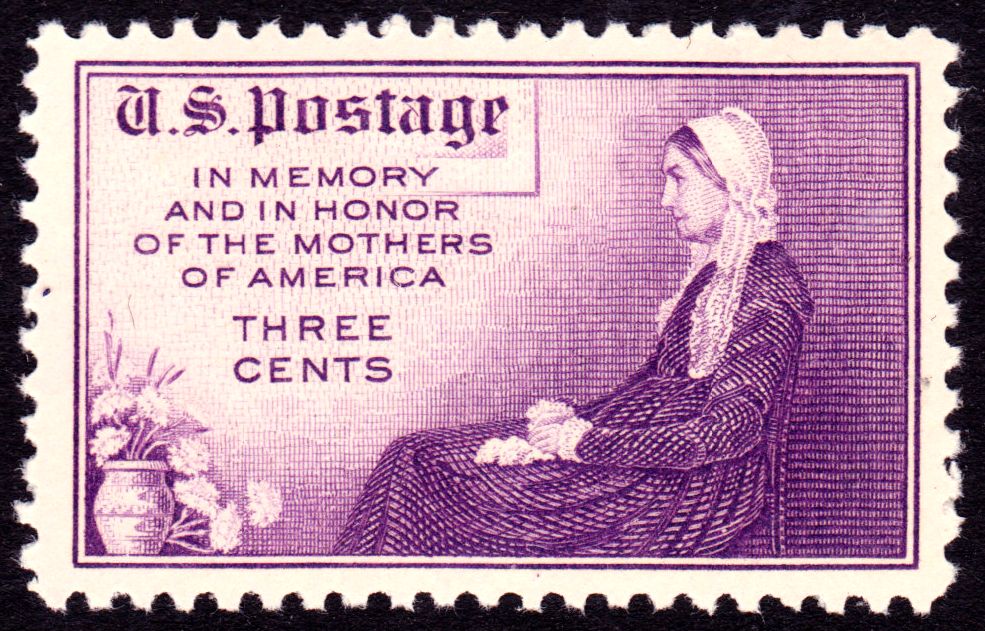
To take them in reverse order, the detail from Whistler’s painting provides a great example of how “snippets” from an artistic creation can be isolated and given a meaning contrary to the one the artist intended.  This effect is particularly pronounced when they’re also given a different name and when other material is added that reinforces the contrary meaning, like the potted flowers in the “Mothers of America” stamp.

This happens all the time with the Bible.  Episodes or even sentences are snipped out, isolated, and supplemented, and as a result, even if they still say something edifying, we miss what they really meant in their original context.  The “parable of the prodigal son,” for example, is a wonderful story of repentance and reconciliation, but if we don’t see it as only one part of the “parable of the unforgiving older brother,” we miss the overall point that Jesus wanted to make.  So there’s a strong case for the approach taken in The Books of the Bible:  removing chapters and verses and headings and presenting the books of the Bible as whole literary compositions.

However, the example of the Liberty Bell shows us that sometimes the settings and adaptations introduced by later users can enhance rather than obscure the original creative intentions behind what has become a cultural artifact.  This is true of the Bible in the sense that all of its individual works take on a deeper significance (but one that is still consistent with their original meaning) when they are gathered into a collection where they can be read in light of one another and in light of the grand story they all tell together.  The Books of the Bible is designed to encourage such a reading by grouping those books that can be read most meaningfully together and by situating each book within the grand story of Scripture.

Finally, the example of the cleaning of the Sistine Chapel ceiling shows that we do become accustomed to engaging artistic creations as they have become known, and that it can be a pleasant surprise (or even an unpleasant shock) to encounter them in something much closer to their original form.

Some people may always prefer what the Bible has become, and see it as a book inherently divided into chapters and verses.  But our hope is that through The Books of the Bible, many will be able to encounter the artistic creations (literary compositions) it contains in a form much closer to their original one, and so have a more enjoyable and meaningful encounter with God’s word than they otherwise would have had.

Interior page from The Books of the Bible

“Whistler’s Mother” or “Arrangement in Grey and Black”?

In this series of posts, to consider whether chapters and verses specifically should be accepted as an inherent part of the Bible, I’ve been exploring more generally whether the accumulated marks of any artistic creation’s subsequent history as a cultural artifact become part of its essential substance and meaning.  We saw last time, in the case of the Liberty Bell, that the cultural artifact with its distinctive marks of wear—specifically, the famous crack—is actually preferable to the original pristine artistic creation, but only because this is an even better expression of the creators’ intentions.

In other cases, good reasons can be given for stripping away at least some of the marks of an artistic creation’s subsequent history as a cultural artifact, similarly in the interests of preserving or recapturing the creator’s original intention.

Consider the painting that James Abbott McNeill Whistler originally entitled Arrangement in Grey and Black. It has been given the popular title Whistler’s Mother and it has become an icon for motherhood and filial devotion.  In 1934 the U.S. Post Office even issued a stamp “in memory and in honor of the mothers of America“ that included only the figure from Whistler’s painting, not the overall composition, and even added some potted flowers!

It is safe to state that this appropriation of the figure is not just different from, but directly counter to, the artist’s intentions in painting it.  In explaining his artistic philosophy, Whistler once insisted:

Art should be independent of all claptrap—should stand alone, and appeal to the artistic sense of eye or ear, without confounding this with emotions entirely foreign to it, as devotion, pity, love, patriotism, and the like. All these have no kind of concern with it; and that is why I insist on calling my works “arrangements” and “harmonies.”

In other words, Whistler himself explicitly rejected the sentimental approach to art that a title such as Whistler’s Mother would imply.  A viewing of his painting that was informed by this title, and which saw it as an expression of filial love and devotion, would therefore necessarily be in opposition to his intentions.  If we wish to understand the painting at all according to Whistler’s intentions, its popular title, at least, should be stripped away and replaced with the original one, and the figure should be situated within the entire original composition, so that viewers can once again appreciate Whistler’s purposes in painting it.

Some might counter that the figure in the painting has a universal quality, evocative of timeless human experience, that permits and even demands that its meaning not be limited by the views of the man who created it at a particular moment in Western cultural history.  Suppose that’s true.  Then even though we would certainly want to be aware of Whistler’s views and intentions, we could find a meaning in this figure that transcends them and reaches into interpretations that Whistler not only didn’t intend, but would actually have opposed.  In other words, a viewer might, in the end, see greater value in Whistler’s Mother than in Arrangement in Grey and Black.

However, we must note that a viewer making this judgment is not really seeing Arrangement in Grey and Black, but only a detail from it.   It is this detail, isolated from the rest of the composition, that people have used as an icon for filial devotion (as on the 1934 stamp).  Some meaning contrary to the artist’s intentions may be imputed to this isolated figure, but not to the composition as a whole, in its entirety as he created it.

This example shows that if the originally intended form or meaning of an artistic creation has been lost to “cultural associations,” repristinating that creation requires not only stripping away accretions, but also situating isolated parts back within the whole.  In the case of Whistler’s painting, the popular title should be taken away and the rest of the painting should be brought back.  (And the potted flowers have to go, too!)

I’ll conclude this series next time with some thoughts about the Bible in light of the examples I’ve explored.

James Whistler, “Arrangement in Grey and Black,” 1871

Would the Liberty Bell still be the Liberty Bell without the crack?

If we could restore the Liberty Bell to its original condition, removing the famous crack, should we?

This is one more way to ask the big question I’ve been pursuing in this series of posts. As someone put the question in the case of the darkening and harmonizing patina that had accumulated on the Sistine Chapel ceiling before it was cleaned, “Do cultural associations and markings of the passage of time heighten or mar the aesthetic value of art?”  That is, does the full creative process include settings and adaptations introduced by later users?  Or do the accumulated marks of an artistic creation’s subsequent history as a cultural artifact never really become part of its essential substance and meaning?

Our interest in these questions arises from the way The Books of the Bible seeks to strip away the accretions of centuries from the Scriptures.  This leads us to ask, Is the Bible what it has become? And if it is, does that mean we should keep engaging the Bible as it has come to be known, in its chapter-and-verse form, rather than by seeking to repristinate it in some way by recovering its constituent literary creations?

To help answer these questions, let’s think about the Liberty Bell.  It was designed as an object that would be not just functional, but beautiful.  Beyond any beauty of form or adornment, it was specifically intended, like all bells, to produce a pleasing musical sound (rather than to summon the attention by making a jarring noise, like a horn or a siren).

When the Liberty Bell cracked, the beauty of its sound was marred.  So there is certainly a difference between how the bell was originally intended to sound and the way it would sound if it were struck today.  What reasons might we give for preferring the original “art“ or “beauty“ of the bell to its present “art“ or “beauty,“ or vice versa?  In other words, if it were somehow possible to restore the bell to the condition it was in before it cracked, and recapture the original sound of its tone, would we want to do this?

Probably not.  The Liberty Bell has become a powerful cultural icon in its present condition; the crack makes it instantly identifiable.  It has come to symbolize the foundational American value of “liberty“ for a series of reasons:
– Its inscription, “Proclaim liberty throughout the land”;
– Its association with the founding generation through its use to toll their deaths (many believe it was during the 1835 funeral of Chief Justice John Marshall that it cracked beyond repair);
– The symbolic use that was then made of it by abolitionists and suffragists.

Most poignantly of all, because of the crack, this is a “wounded” bell.  It has been injured in the cause of “proclaiming liberty.”  Freedom can only be had at a price, and the wounded bell now represents and commemorates all who have paid this price for our freedom.

And so most of us would likely prefer the “art“ of the bell with its “cultural associations and markings of the passage of time“ to the “art“ of the musical note that might be restored if its crack were repaired.  All of the rich cultural associations this bell now carries would hardly be sacrificed simply to recover its original tone.

In other words, there seem to be some very good reasons for preferring the Liberty Bell as we have come to know it to what was originally the “Pennsylvania State House steeple bell.”  So is this evidence that subsequent cultural development sometimes should be preferred over original artistic intent?

Not exactly.  This bell may actually have been intended from the start to become a cultural icon.  Many historians believe that it was commissioned in 1751 to commemorate the fiftieth anniversary of the Charter of Privileges, by which William Penn transferred legislative authority from his Proprietorship to the Pennsylvania Assembly.  This is why, they argue, the bell was ordered with its inscription about “proclaiming liberty,” which is actually a quotation from Leviticus, referring to the year of jubilee.

The later uses of the bell as an icon for liberty would therefore be a development of these original intentions.  We can reasonably surmise that the Pennsylvania colonial legislators who ordered the bell would not want us today to sacrifice its greatly heightened iconic value simply to restore its tone.  Not repairing the crack would thus not only be preferable from a cultural and artistic standpoint, it would also be in keeping with what seem to have been the original intentions of the creators.

In other words, if this historical theory is correct, what came first was the Pennsylvania Assembly’s desire to commemorate the anniversary of the Charter of Privileges.  What came second was a specific means of marking this anniversary:  the commissioning of a bell.

So when we prefer the current, cracked bell with its heightened iconic value, this isn’t just an aesthetic judgment (“certainly a national symbol shouldn’t be destroyed just to restore the tone of a bell”).  Rather, it is an expression of respect for the original intentions of the bell’s patrons.  Precisely because the bell is cracked, it can now be used only as an icon for liberty (its constituting purpose), and not also for secondary purposes such as summoning the Assembly, celebrating special events, etc.

So in this case, the “markings of the passage of time” that we wish to retain are meaningful because they express the ultimate intentions of those who created the bell.

But in other cases, good reasons can be given for stripping away at least some of the marks of an artistic creation’s subsequent history as a cultural artifact, specifically in the interests of preserving or recapturing the creator’s original intention.  We’ll look at such a case next time.

Was the cleaning of the Sistine Chapel ceiling a crime against art?

At the end of the last century, a 20-year project to clean the soot and grime off the Sistine Chapel ceiling was finally completed. In my book After Chapters and Verses, I use this cleaning as an analogy for the way The Books of the Bible similarly strips away the accumulated accretions that have obscured the original appearance of the biblical writings.

It should be noted, however, that this cleaning was actually quite controversial.

Many responded with delight and wonder to the discovery that Michelangelo’s colors had originally been so bright and bold.  But others were deeply disappointed. They felt that the true art of the chapel was its frescoes as they had come to be known. They lamented that this art was lost forever when the darkening and harmonizing patina was taken away to reveal what they derided as “ice cream colors“ beneath.

Michelangelo’s portrait of Daniel before and after cleaning (courtesy Wikipedia)

As one observer put it, “Many people loved the Sistine Chapel’s subtle hues and shadowy figures and were dismayed by the brilliant pink, turquoise, lapis blue, and tangerine now uncovered from beneath centuries of candle smoke and other gunk. Through the dramatic transformation, these people lost what they had loved—even if they might have gained a masterpiece more similar to what Michelangelo had created.”

Another observer (Tim Griffins, in a post no longer on line) said the cleaning of the ceiling raised the profound question, “What is art?” He wondered, “Do cultural associations and markings of the passage of time heighten or mar the aesthetic value of art?”

This same question applies to the Bible. Is the traditional Bible, like a sooty fresco by Michaelangelo, actually better off for the wear? In other words, have the chapter and verse divisions become an essential part of what the Bible now is for us today?

For many people, they apparently have.  One young man described his initial experience with The Books of the Bible this way: “My very first impression was one of discomfort. It felt weird and somewhat disrespectful to me to pick up the Bible as a book without those little verse numbers and chapter headings. Bibles have those.”

However, after he had read in the edition for a little while, he changed his mind. “Reading Scripture this way flows beautifully,” he reported. “Rather than missing the verse numbers and chapter headings, I like them gone. They got in the way.”

In the end this young man had a very positive experience with the Bible in a new format. But a certain belief nearly prevented this—that when it comes to chapters and verses, “Bibles have those.”

Expressed more generally, this is the belief that the Bible is what it has become. This is actually an aesthetic commitment: that a work of art is not finished or complete in the form in which its creator releases it.  Rather, it continues to grow and take on substance and meaning throughout its subsequent history as a cultural artifact. If that’s the case, then something essential to the Bible actually is lost when the shaping of later centuries is undone, as happens in The Books of the Bible.

Does the full creative process include settings and adaptations introduced by later users? Do the marks of an artistic creation’s subsequent history as a cultural artifact become part of its essential substance and meaning?  Is the Bible what it has become over the centuries? And if so, does that mean we should keep engaging the Bible as it has come to be known, rather than seeking to repristinate it in some way? I’ll start exploring these questions next time by considering another artistic creation that has become a cultural icon.

Was King Jehoram’s “youngest” son not his last son?

Q.  I’m confused about Jehoram and Ahaziah. Jehoram was 32 years old when he became king and he reigned 8 years, so he was 40 when he died. The people of Jerusalem took his youngest son Ahaziah and make him king when he was . . . 22? So Jehoram stopped having sons when he was 18?  That seems so unlikely.  And then I see in a footnote that some manuscripts say that Ahaziah was 42 when his father died at 40, which of course is impossible! I mean it doesn’t really matter, but what do you think is the deal?

Actually, it does matter quite a bit, as we’ll see at the end of this post.  But first, let’s try to figure out what’s going on here.

The traditional Hebrew text of the First Testament (the Masoretic Text) does say in Chronicles that Ahaziah was 42 years old when his father died at age 40—an impossibility, as you note.  This is clearly a copying error that has crept into the text.  The account of these same rulers in Samuel-Kings has a more reliable figure: Ahaziah was 22 when his father died.

But your real question is, assuming that 22 is the correct age, why did Jehoram stop having children at only age 18 (since Ahaziah is said to be his “youngest”)?  This is an excellent question, and one that I haven’t seen discussed in the scholarly literature.

Most Israelite men didn’t marry and have children until they were somewhat older, but crown princes had a responsibility to make sure that the royal line continued, so they married younger and had many children by multiple wives and concubines.

According to the version of this account in Chronicles, the reason why Ahaziah, the youngest, succeeded to the throne is that Judah’s enemies invaded the land and carried off and killed all the older royal princes.  (Ahaziah may have been overlooked or ignored precisely because he was the youngest.)  Since there were these older brothers, this means that Jehoram probably married and started having children as soon as he was physically able, in his early teens.  But this doesn’t explain why he stopped at age 18, particularly in a climate where a nation’s enemies might try to wipe out the entire royal line.

Here’s what I think is going on.  The text explains that during Jehoram’s reign, “the Philistines and the Arabs who lived near the Cushites attacked Judah, invaded it and carried off all the goods found in the king’s palace, together with his sons and wives. Not a son was left to him except Ahaziah, the youngest.”  Then, after Jehoram dies, it says, “The people of Jerusalem made Ahaziah, Jehoram’s youngest son, king in his place, since the raiders, who came with the Arabs into the camp, had killed all the older sons.”
I think this actually means, “The people of Jerusalem made Ahaziah king in Jehoram’s place, since the raiders, who came with the Arabs into the camp, had killed all of his older sons, but Ahaziah, who had been the youngest at the time, had survived” (because he was overlook or ignored because he was just an infant).

In other words, this is one of those places where the Hebrew narrative describes a person from the perspective of a past incident that is being related, rather than from a contemporaneous perspective.  Ahaziah likely wasn’t Jehoram’s youngest son absolutely, but he was the youngest of the senior royal princes who were born early in Jehoram’s reign.  He continued to be known as the “youngest” (the qatōn) because that was how he had survived the massacre.

In fact, the Theological Dictionary of the Old Testament notes that in Judges, qatōn “singles out” Jotham, Gideon’s “youngest,” as the “sole survivor when his brothers were murdered—probably on the assumption that he was too small to be noticed.”  The TDOT then adds that “the special position of such a survivor is clear from” the story of Ahaziah in Chronicles.

This, I would say, is the answer to your excellent question—why would a king whose lineage was threatened not have had any children for the last twelve years of his reign, when he was still in young adulthood?  Actually, he did, but Ahaziah is described as the “youngest,” even though he wasn’t the last, because he survived the massacre and could succeed to the throne.

So why does this matter?

First, the fact that in the Bible a man’s son could be described as his “youngest” even though he wasn’t his last shows that we can’t read the First Testament in a simplistic, literalistic way.  We need to be sensitive to the nuances of meaning inherent in Hebrew language and literature.

Second, going back to the faulty reading “42,” we need to recognize that the Masoretic text does contain some blatant errors, some of which even contradict other places in the Bible.  (Often in cases like this the Masoretes left a marginal note to the synagogue reader to say something different than what’s found in the text, but there’s no such note in this case.)  So we shouldn’t give automatic preference to the Masoretic Text in determining the original reading.  But the RSV and NRSV do this, and so they have Ahaziah 42 years old when his father was 40—without any explanatory footnote!  A word of caution to translators: don’t preference the Masoretic Text to this extent.

Was the medium at Endor really able to bring up Samuel?

Q. How could the sorceress of Endor summon the spirit of Samuel from the dead? Was it really Samuel? How should we interpret
this episode in the Bible? Thanks.

Washington Allston, “Saul and the Witch of Endor”

For many episodes in the Old Testament such as this one, it’s truly a case of “you can’t get there from here.”  The story of Samuel and the medium who lived in Endor is related within the world view of an ancient culture in which it was believed that people who died became “shades” who rested in Sheol and who might be “disturbed” and brought up to earth for a time.  We today find it hard to understand how this could happen, particularly in light of the teaching of the New Testament that death is final so far as our earthly lives are concerned, so that the spirits of the dead cannot return to earth.

But this only illustrates how the Bible actually speaks from within a variety of cultural settings.  God “speaks our language” in the Scriptures to that extent.  I personally don’t believe that it’s possible to harmonize all of the different world views that we find represented in the Bible.  But I don’t think we need to try to do that, either.  We just need to recognize what the Bible really is and accept it as such:  a sprawling compendium of accounts from many different settings in human history that together tell the story of God’s dealings with humanity over the course of that history.

When we accept that the Bible speaks from a variety of cultural perspectives, then the message of this story about Saul and the medium becomes clear, and the account is no longer confusing or perplexing.  If we “suspend disbelief” and work with the story, allowing that the medium could bring Samuel up after his death to speak with Saul, then we realize that this episode, one of the last in Saul’s life, is filling out the portrait of his character that has been sketched all along.

In an earlier post I’ve addressed the question of why Saul was rejected as king for what seem like minor infractions, while David was called a “man after God’s own heart” even though he made major mistakes and committed serious sins.  The essential difference between these men is that David never turned away from the LORD to other gods, and as king he never usurped divine prerogatives.  Saul, on the other hand, never really accepted these limitations, and now we see him actually turning to occult powers—”mediums and spiritists”— even though he has previously expelled them from the land in obedience to the law of Moses.

Right to the end, Saul was a man who didn’t hesitate to take matters into his own hands, no matter what compromises this involved with God’s expressed wishes and intentions.  This last episode just before Saul’s untimely death validates God’s judgment against him as a king who wouldn’t respect the limitations on his power and actions necessary for him to be God’s agent ruling the people of Israel.

In other words, this account completes the biblical portrait of Saul as a truly tragic figure.  It does so within a world view we can’t quite embrace today.  But we shouldn’t let that stand in the way of our hearing its crucial message:  we can’t take it upon ourselves to decide which of God’s constraints on our lives we will honor.  We need to honor them all.

What does it mean to “fear” God?

Q.  There’s been something that’s been eating away at me about our relationship with God.  Jesus said the most important commandment is to love the Lord with all your heart, your soul and your strength.  Okay, that might be possible if it weren’t for the  “flip side.”  In Matthew 10, Jesus said not to “fear those who can kill the body but not the soul. Fear Him, rather, who can destroy both the body and the soul in hell.”  I don’t think I’m alone in having felt far more fear during my life than love.  I don’t think anyone can truly love and trust someone they’re scared “to death” of.  People have told me that “fear of God” means “reverential awe,” but the idea of body and soul being destroyed in hell seems more like “terror and shaking” to me.

You’re right, there’s no question that Jesus told us both to love God and to fear God in the sense of being afraid of what might happen to us if we really displeased God.  But I think the essential issue is, “What is God’s fundamental disposition towards us?”  Is it to welcome and heal and bless, or is it to accuse and judge and punish?  I believe that God is both loving and just, gracious and righteous, so the real question is whether we can count on God wanting most of all to see us healed and transformed and restored, or whether God is basically out to get us, just waiting for us to mess up so he can nail us.

God’s own self-description in the Bible leads us to believe that he is fundamentally gracious and loving.  Moses begged God, “Show me your glory,” and in response God “proclaimed his name” to Moses in a special divine appearance. He said, “The Lord, the Lord, the compassionate and gracious God, slow to anger, abounding in love and faithfulness, maintaining love to thousands, and forgiving wickedness, rebellion and sin. Yet he does not leave the guilty unpunished; he punishes the children and their children for the sin of the parents to the third and fourth generation.”  Here we see the two sides of God, the side that attracts us to love him and the side that makes us afraid he will punish us and even makes us wonder how God can go after the children and grandchildren of offenders.  (But that’s for another post.) However, the loving side is clearly primary and predominant.  So we can be eager to love and please God knowing that he’s working with us to make that happen, and not looking for every chance to punish us.

I remember that when I went to the dentist once when I was a kid I reached up for some reason to try to move his hand when he was working on my teeth.  He quickly and powerfully slapped my hand away.  But then he explained patiently and kindly that I could hurt my mouth and teeth badly if I ever moved his hand while he was at work.  (Not that I’d really have had the strength to do that!)  He told me I could just raise my hand and he would stop what he was doing and listen to my concern.  So, should I have been afraid to go back to the dentist after this, fearing that he might slap me again?  Or should I have been reassured that all he wanted to do was protect me and care for me?  So long as I didn’t reach for his hand again, I could be perfectly secure and safe trusting him to care for me.

I think it’s the same way with God.  He has great power that he will use to keep us from harming ourselves and others.  But what he really wants is to help and protect us.  If we know that he wants the best for us, and that we’re working with him to help bring that about, we don’t need to have the “terror and shaking” kind of fear.  But we should still have a healthy respect for what God can and will do to protect us and others from the destructive things we might do.  And that, in itself, shows that God is essentially loving.

Who are the 144,000 in the book of Revelation?

“Sealing the 144,000” Ottheinrich Bibel, c. 1430

The identity of the 144,000 who have their “Father’s name written on their foreheads” is one of the great puzzles in the book of Revelation.  Because these people are said to be “from all the tribes of Israel,” they are often understood to be Israelites of some kind.  But there’s a very good reason to believe that they are not exclusively Israelites, but rather a different group that includes some Israelites.

The list of the tribes of Israel in the description of the 144,000 in Revelation is different from any other such list in the Bible in two significant ways:
(1) the names are different and
(2) the order is different.

Elsewhere in the Bible, these names are typically listed in one of two ways.  When they are being presented as the sons of Jacob, they are listed by birthright, according to the seniority of his wives and concubines and the birth order of their sons:

Sons of Leah
Reuben, Simeon, Levi, Judah, Issachar, Zebulun.
Sons of Rachel
Joseph, Benjamin
Sons of Bilhah
Dan, Naphtali
Sons of Zilpah
Gad, Asher

On the other hand, when the names represent the tribes of Israel, that is, territorial and civic entities, Levi is not listed because his descendants became temple servants and were not assigned any territory.  To get back to a total of twelve, Ephraim and Manasseh are listed in place of their father Joseph.  When the names represent the tribes, they are often listed in geographic order, roughly from south to north.

In Revelation, Levi and Joseph are both on the list, suggesting that the sons of Jacob are in view.  However, Manasseh also appears on the list, even though all of his descendants are already included in Joseph—this is a redundancy.  And Dan, for some reason, is missing.  So we have one tribe too many and one tribe too few.  And the order isn’t even close to being correct either by birthright or geography.

So what’s going on here?  As I’ve argued in this article, I believe that here in Revelation we have a “portrayal of the church as the new Israel in the names and order of the tribes.”  That is, the names are presented in such a way as to show that the community of Jesus’ followers is the continuation of the people of God flowing out of the community of ancient Israel.

Specifically, in the portrayal of the 144,000:
• Judah comes first because Jesus was from that tribe as the Messianic heir to David’s throne.  He is the “lion of the tribe of Judah.”
• Reuben comes next representing believing Israelites, the “firstborn” who belong to God.
• Then come four names representing the tribes descended from Jacob’s concubines, who come last by birth order, but in the community of Jesus’ followers, “the last shall be first.”  These names represent the Gentiles, who at the time of the book’s writing are actually coming to faith ahead of the Israelites.
• However, one of the four names, Manasseh, is a replacement for Dan.   The tribe of Dan was the first to fall into idolatry and the first to be carried off into exile.  This represents the danger of apostasy in general (one of the main concerns of Revelation), and perhaps also how Judas Iscariot fell away and was replaced by Matthias.
•  The remaining sons of Jacob’s full wives make up the last six names on the list, expressing the expectation that ultimately “all Israel will be saved.”

The 144,000, in other words, represent the community of all who believe in Jesus, whether Jew or Gentile.  They are a symbolic representation of the reality that is described more literally immediately afterwards, the “great multitude that no one could count, from every nation, tribe, people and language.”

This is another of the places where the book of Revelation is creatively adapting an image from the First Testament to speak to New Testament realities, in this case the continuity between the covenant communities of both testaments; they are one people of God.  This same theme is encountered in other places in Revelation as well, such as when the new Jerusalem is seen to have “the names of the twelve tribes of Israel” on its gates and “the names of the twelve apostles of the Lamb” on its foundations, or when the human community around the throne of God is represented as 24 elders, depicting the first and new covenant communities, 12 being the covenant number in the book.  But in this case the continuity of the covenants is symbolized by 12 x 12 (144) rather than 12 + 12 (24).  The symbol is intensified by multiplication by 10 x 10 x 10 (1,000), representing the totality of those who belong to the community.

How can a man “commit adultery in his heart” with a woman if they’re both single?

Q. Jesus said that “anyone who looks at a woman lustfully has already committed adultery with her in his heart.”  But what if neither one is married?  How could that be adultery?  And I don’t think many married couples would be together if there weren’t some lust involved.

The saying of Jesus that you’re asking about comes from the part of the Sermon on the Mount where he’s showing that legalistic interpretations of the law of Moses are contrary to its true spirit and intentions.  The Pharisees taught that so long as you didn’t literally break a commandment, you were still law-abiding if you did anything just short of it.  For example, you could lose your temper and beat somebody up terribly, but so long as you didn’t kill them, you wouldn’t have broken the commandment that says, “You shall not murder.”

Jesus teaches, by contrast, that the desire, intention, and attempt to commit an action are all of one piece with the action itself.  The commandment against murder is actually meant to warn us away from hatred, bitterness, and assault, not just actual murder.  Jesus taught an inward righteousness whose goal was to be “perfect . . . as your heavenly Father is perfect,” in thought, word, and deed.

The first two examples that Jesus chooses to illustrate this teaching come from the Ten Commandments:  “You shall not murder” and “you shall not commit adultery.”  The Ten Commandments themselves were not meant to be interpreted legalistically.  That is, their meaning was not supposed to be limited to a strict literal reading, as if they were forbidding only the specific named practices.  Rather, they were all provided as examples of the kinds of things that God does and doesn’t want us to do.  We are supposed to determine from them, by inference and analogy, many other kinds of things that we should and shouldn’t do.

This principle is illustrated right within the Ten Commandments themselves, when the last one says not to covet your neighbor’s wife, or his house or land, or any of his servants, his ox or his donkey, or anything that belongs to your neighbor.  In other words, specific examples are given to illustrate a principle that is meant to be applied generally.  As I write in my Deuteronomy-Hebrews study guide, “The Ten Commandments are a brief but powerful moral code because they teach general principles through specific rules that can be applied to a wide range of contexts. The literal application of these rules is narrow, but they all provoke reflection on their underlying principles, and these can speak to a broad variety of situations.”

The commandment against adultery, therefore, is not meant to show  just  that a person who is married shouldn’t have sexual relations with someone else they’re not married to.  Rather, it shows more generally that sexual relations should take place only between a husband and wife within marriage.  This general application would also rule out sexual activity between two people who aren’t married.  And Jesus’ teaching in the Sermon on the Mount shows that there should also not be the desire, intention, or attempt on their part to have sexual relations—even through that long, lingering look.  This teaching also shows that any use of pornography is not in keeping with God’s intentions.

But how, then, would anyone get married “if there weren’t some lust involved”?  I think it’s important to distinguish between sexual attraction and lust. I believe that people can experience a pure sexual attraction for another person that is actually expressing a deep admiration for everything about them—their body, yes, but also their character, personality, passions, abilities, and even the depth of their Christian commitment.  Feeling this kind of attraction can be a sign that perhaps you should think and pray carefully about marrying this person.

Lust, on the other hand, is a shallow, self-indulgent desire.  It wants simply to consume something of another person based on their most superficial characteristics.  Someone who’s attracted to you in that way isn’t paying you much of a compliment (they hardly know you) and it’s not time to think about marrying them.

Put simply, without that sexual spark in a marriage, it’s going to be a long 50 years.  But that spark is supposed to be ignited when everything about one person finds companionship, challenge, help, and mystery in everything about another person.  If it’s simply a mating instinct, there’s a whole lot more both people could discover about themselves, each other, and God’s purposes for their lives by waiting before mating.

Are the “red-letter” parts of the Bible superior to the “black-letter” parts?

In the current issue of Christian Ethics Today (#89, Spring 2013), Tony Campolo, one of the founders of the Red Letter Christian movement that seeks to promote non-violence and social justice, makes some provocative statements about the biblical basis for its positions.  He writes, “Our critics responded to our new name by saying, ‘You people act as though the red letters of the Bible are more important than the black letters.’ To that, we responded, ‘Exactly!'”

While I am very sympathetic to the overall aims of this movement, I am concerned that statements like this one actually undermine its otherwise solid biblical grounding.  So I would like to explain what I feel are the dangers of asserting, as Campolo does, that “the red letters are superior to the black letters of the Bible,” and suggest another way to understand how the Bible undergirds the progressive vision of the Red Letter Christians.

By way of background for those who are not familiar with the source of this terminology, in some editions of the Bible the words of Jesus are printed in red.  This was first done by Louis Klopsch, then editor of the Christian Herald, for a New Testament in 1899 and a full Bible in 1901, so that followers of Christ could “gather from His own lips the definition of His mission to the world and His own revelation of the Father.”  Since then the format has been adopted widely by publishers, so that most contemporary translations of the Bible are available in “Red Letter Editions.”

The name Red Letter Christians, therefore, expresses a commitment to be guided by the words of Jesus (printed in red letters), in preference to any other teachings in the Bible (printed in black letters), since the latter have now been “transcended by a higher morality,” as Campolo puts it.  (The group’s name has been adopted specifically as an alternative to labels such as “fundamentalist” and “evangelical,” which originally conveyed a similar commitment to following Christ’s teachings, but which he says now carry much “negative baggage.”)

Now as I’ve said, I’m very sympathetic to the aims of this movement. As I write in this post, I believe personally that “Jesus’ life and teachings provide, for his followers, the interpretive key to the entire Scriptural record of God’s dealings with humanity.  In light of them, believers identify what things are normative and what things are exceptional.”  However, I also believe that this involves a process that’s more complicated than simply reading and following the red letters at the expense of the black ones.  Let me explain why.

For one thing, there is the practical issue of what actually are red-letter statements and what are black-letter ones. Interpreters and publishers don’t agree about this.  In the gospel of John, for instance, there are places where it’s not clear whether Jesus is still speaking or whether the gospel writer has resumed the narrative.  There are actually no quotation marks or any other punctuation in the earliest NT manuscripts. So in many cases it’s an interpretive decision where to put quotation marks and thus which statements to attribute to Jesus.

Publishers also disagree about whether only words spoken by Jesus on earth should be put in red, or whether things he spoke after his ascension to people back on earth should be in red as well.  For that matter, some biblical statements are “black letter” when they first appear in the Old Testament, but then “red letter” when Jesus quotes them in the New Testament.  Is the identical statement in its red-letter presentation superior to its black-letter form?

Because of such considerations, some translation committees actively discourage red-letter editions.  The Committee on Bible Translation, for example, says in the Preface to the New International Version (NIV) that it “does not endorse” such editions.  So treating them as the default presentation of the Scriptures and a suitable source for a meaningful allusion puts the Red Letter Christian movement on  shaky ground.  There really are no “red letters” in the Bible.

But this is not the most important problem with the approach Campolo describes.  Rather, we need to recognize that “red-letter” statements, even if there were such a thing, and we could identify definitely which ones they should be, would only be meaningful in the context provided by the surrounding “black-letter” statements.  This is true in the case of individual passages and books, and in the case of the Bible as a whole.  Just as a word is only meaningful in the context of the other words around it, so a statement in a literary work is only meaningful in the context of the statements that surround it.  No black letters, no meaningful red letters.

In other words, we can’t simply extract isolated statements, whoever made them, from the rest of Bible and use them as the basis for contemporary moral and ethical decisions. The difficulty of this approach becomes evident as soon as we begin to compare various “red-letter” statements with each another.  For example, Campolo sees a mandate for non-violence in Jesus’ statement that we should love our enemies.  But Jesus also told his disciples at the Last Supper, “If you don’t have a sword, sell your cloak and buy one.”  Now it may be possible to show how this statement can be reconciled with an overall commitment to non-violence.  But this can’t be done by pitting one isolated statement against another.  On that level, there’s no basis for deciding which should take precedence.

The fact is that the Bible is not a compendium of individual statements.  It is a collection of literary creations that together trace God’s redemptive dealings with humanity over the course of history.  As we catch the flow of those dealings, we can work out, with fear and trembling, how our lives form part of the story they tell, and we can begin to determine how, in our day, we can help move the story towards its anticipated culmination.  But this necessarily involves ambiguity and perplexity as we struggle to appreciate, perhaps never with complete success, how the parts of the story that seem anomalous somehow nevertheless bring it up to Christ and through him to us today.  It’s not enough to dismiss them as having been “transcended.”

Even so, a Bible that properly consists of all black letters can still get us where the Red Letter Christians want to go; it’s just a little more complicated.  As Campolo himself acknowledges, “The black letters all point to the Jesus we find in the red letters.”  But they do this, for one thing, by identifying him with figures such as Moses, who delivered all those black-letter laws, and Joshua and David, who led violent military campaigns.  Take away these figures and the New Testament portrait of Jesus becomes too vague for us to recognize who Jesus is and why we should follow his teachings and example. But see Jesus in light of these earlier figures and the challenge of following him becomes complex and nuanced.

Even so, I believe we can still live out the spirit of Christ’s teachings in our own day, as the culmination of the entire biblical story.  I know this is what the Red Letter Christians are trying to do, and I truly admire them for that.  I just think the formula for doing this can’t be expressed quite so simply as reading the red letters and leaving the black ones behind.  To me that disintegrates the very Bible that, taken as a whole, can be understood to provide solid support for many of the positions the Red Letter Christians advocate.  I wish them well.